📌 核心提示
2026年8月10日,印尼清真产品保证组织机构(BPJPH)正式签发 《关于入境印尼境外清真产品合规核验的第4号条例》 (BPJPH Reg. No. 4/2026),2026年9月9日起正式生效。
这意味着中国出口印尼的食品、饮料、化妆品、药品、保健品等强制清真认证范围内的产品,须在原产国完成装运前核验并取得清真产品保证报告(LPPH) ,才能正常报关进口。
LPPH 仅对单次装运有效,每批货物均需单独办理。

一、政策背景:为什么出台第4号条例?
印尼是全球穆斯林人口最多的国家,清真产品市场规模庞大。根据印尼《2024年第42号政府条例》(GR 42/2024),食品饮料、化妆品、药品、保健品及部分消费品被纳入强制清真认证范围,首个重大强制认证截止日为 2026年10月17日。
BPJPH第4号条例的出台,正是为这一强制性截止日做准备。BPJPH负责人在发布会上明确表示:“清真产品保证是国家主权的一部分。印尼对各国产品保持开放,但这种开放必须伴随我们确保入境产品符合印尼标准的能力。”
该条例将清真合规从“认证环节”前移至“装运前实物核验环节”——核验不再仅看证书,还要在货物装载仓库对实物产品与证明文件进行一致性比对。

二、新规核心要点
1. 适用对象
依据GR 42/2024须强制实施清真认证的商品与服务,涵盖:
食品与饮料
化妆品
药品与保健品
化学、生物及基因工程产品
部分消费品及产品包装
个人物品、测试样品、过境货物及部分其他类别可获豁免。
2. 核验方式:装运前实地核查
产品须在原产国和/或装运国的货物装载仓库,由BPJPH认定的检验机构完成行政审查与实物检查。
核验范围包括:
行政与清真文件:证书号码有效性、SHLN登记状态、互认协议(MRA)适用性
产品与包装:包装标示的证书号码是否有效、清真标签或非清真信息是否符合要求
装运详情:HS编码、数量、生产代码、生产日期与采购发票的一致性
污染风险:清真产品与非清真产品是否充分隔离,配送设备此前是否用于非清真产品
非清真产品证明文件:CoA、CoO、MSDS等
3. 核心单证:LPPH
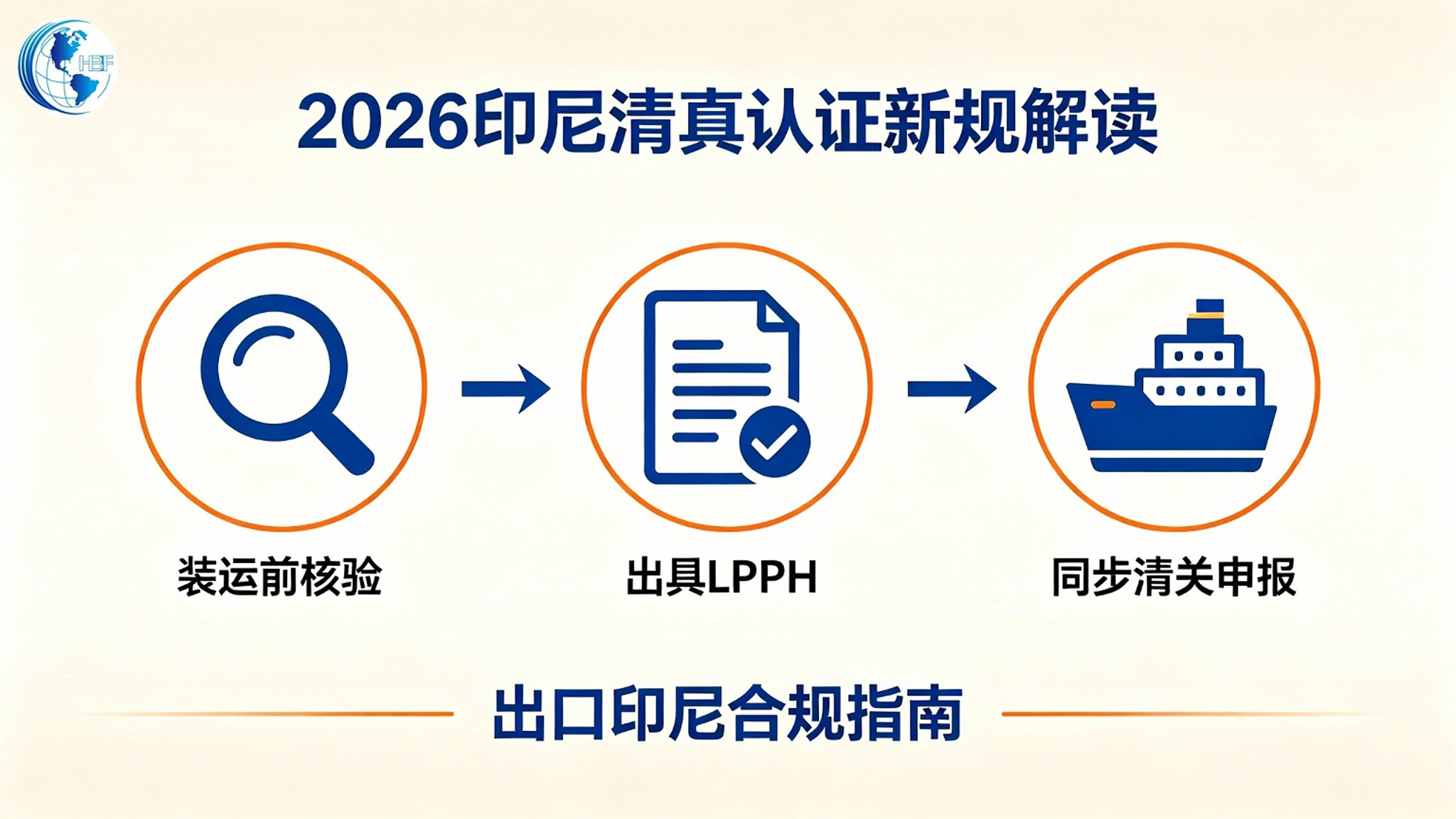
核验完成后,检验机构出具 《清真产品保证报告》(Laporan Pemastian Produk Halal, LPPH) ,通过综合电子系统提交BPJPH,并同步至印尼国家单一窗口系统(SINSW)。
⚠️ 关键限制:LPPH仅对单次装运有效。
这意味着每批货物均需单独办理LPPH,不能一次办理、多批通用。
4. 已公布的检验机构名单
2026年9月10日,BPJPH发布公告,公布四家通过文件审核的检验机构:
| 序号 | 检验机构 |
|---|
| 1 | PT Superintending Company of Indonesia (Persero) |
| 2 | PT Surveyor Indonesia (Persero) |
| 3 | PT Anindya Wiraputra Konsult |
| 4 | PT Mutu Agung Lestari Tbk |
此外,BPJPH已与全球37家境外清真认证机构(LHLN) 签署互认协议,其中包括中国的认证服务机构。
5. 申请流程
LPPH的申请主体为印尼进口商,一般流程如下:
① 进口商提交申请 → ② 选择指定检验机构 → ③ 检验机构核验申请文件 → ④ BPJPH开具发票,进口商付款 → ⑤ 与出口商安排检验时间 → ⑥ 在装运国/原产国装载仓库进行检验 → ⑦ 检验机构出具LPPH → ⑧ LPPH电子提交BPJPH,用于报关
时间提示:进口商须在付款后30个日历日内提供检验排期;检验机构一般需15个日历日完成评估,可延长最多15天。企业应将此周期纳入出货计划。
三、关键时间节点
| 日期 | 事项 |
|---|
| 2026年9月9日 | BPJPH第4号条例正式生效 |
| 2026年10月17日 | GR 42/2024项下首个重大强制认证截止日 |
| 2026年—2034年10月17日 | 不同产品类别分批到期 |
2026年10月17日首轮到期的品类包括:食品饮料、化妆品、天然药物、准药品、保健品、部分化学及基因工程产品、部分消费品。
四、配套条例:非清真产品标签要求
BPJPH第3号条例(2026年7月起生效)要求:
含非清真成分或非清真工艺的产品,包装须标注 “NON-HALAL” 或 “THIS PRODUCT CONTAINS PORK OR LARD” 标识。
存量产品可流通至2027年7月。
注意:产品即使标示“非清真”,也不一定自动豁免装运前核验。BPJPH第4号条例的分析指出,非清真产品仍可能需完成符合性核查。建议提前准备CoA、CoO等支持文件。
五、对中国出口企业的四大影响
影响一:每批新增合规成本
原产国核验费 + LPPH单证费。参考印尼清真认证常规费用,中等规模企业单次认证成本约500万印尼盾,大型企业约1250万印尼盾,检验机构审计费为主要构成。LPPH每批单独办理,出口流程拉长,报价与交期需重新测算。
影响二:清关风险上升
LPPH缺失或与报关信息不符,将影响放行,可能产生滞港费、罚款甚至退运。LPPH未同步至SINSW系统,报关单将无法正常提交。
影响三:跨境电商同受约束
通过Shopee、TikTok等平台及跨境包裹渠道进入印尼的清真受监管商品,同样须合规。Permendag 19/2026进一步要求电商平台卖家披露产品原产国、SNI证书或登记号、清真证书号等信息。
影响四:合规叠加常态化
叠加印尼电商进口新规(Permendag 19/2026:跨境卖家须提供营业执照、产品合规证明、FOB 100美元价格下限等)与进口低报严查,出口印尼合规门槛全面抬升。
六、出口企业应对建议
建议一:立即排查品类
对照GR 42/2024清单确认产品是否落入强制范围及对应截止日期。重点核查:产品是否属于食品、饮料、化妆品、药品、保健品等强制类别。
建议二:提前对接LHLN机构
选择经BPJPH认定的境外清真机构,尽早完成核验与LPPH办理。避开10月前办理高峰,预留至少30-45天的核验周期。
建议三:统筹物流与清关
LPPH须与报关单同步。订舱、申报、清关一体化安排,避免单证与货物脱节。核验在装载仓库进行,需确保仓库具备隔离条件,清真产品与非清真产品不得混放。
建议四:确保文件与实物一致
包装上的证书号码、HS编码、生产代码、生产日期必须与采购发票、订单清单、清真证书完全一致。任何不一致都可能触发核验不通过。
建议五:建立常态化合规机制
LPPH每批单独办理,意味着合规不是“一次性认证”,而是 “每批装运的例行程序” 。频繁出货的企业应将装运前核验纳入标准出口流程。
七、结语
2026年9月9日,印尼清真进口合规正式进入 “装运前核验时代” 。从“有证书就能进”到“每批货物都要验”,这一转变对中国出口企业提出了更高的合规要求。
核心逻辑很清晰:印尼要确保入境产品不仅“证书上符合清真”,而且“实物上也符合清真”。对于出口印尼的食品、化妆品企业而言,提前准备、对接机构、确保一致,是应对新规的三条基本路径。
距离10月17日首个强制认证截止日已不足两个月。现在开始行动,比被动等待更重要。
2026 Indonesia Halal Certification New Regulation: Compliance Guide for Chinese Food & Cosmetics Exporters (BPJPH Reg. No. 4/2026)
📌 Key Notice
On 10 August 2026, Indonesia's Halal Product Assurance Organising Agency (BPJPH) officially issued Regulation No. 4 of 2026 on the Conformity Assurance of Foreign Halal Products Entering Indonesia (BPJPH Reg. No. 4/2026), which took effect on 9 September 2026.
This means that Chinese products exported to Indonesia within the mandatory halal certification scope – including food, beverages, cosmetics, pharmaceuticals, and health supplements – must complete pre-shipment conformity verification in the country of origin and obtain a Halal Product Assurance Report (LPPH) before customs declaration.
LPPH is valid for a single shipment only – each consignment requires its own LPPH.

I. Policy Background: Why Regulation No. 4/2026?
Indonesia has the world's largest Muslim population and a massive halal product market. Under Indonesia's Government Regulation No. 42 of 2024 (GR 42/2024) , food and beverages, cosmetics, pharmaceuticals, health supplements, and certain consumer goods fall within the mandatory halal certification scope, with the first major compliance deadline set for 17 October 2026.
BPJPH Regulation No. 4/2026 was introduced precisely to prepare for this mandatory deadline. The Head of BPJPH stated: "Halal product assurance is part of national sovereignty. Indonesia is open to products from all countries, but that openness must be accompanied by our ability to ensure that incoming products meet Indonesian standards."
The regulation shifts halal compliance from the "certification stage" forward to the "pre-shipment physical verification stage" – verification is no longer limited to certificates but requires on-site comparison of physical goods against supporting documents at the loading warehouse.

II. Core Requirements of the New Regulation
1. Scope of Application
Products and services subject to mandatory halal certification under GR 42/2024 include:
Food and beverages
Cosmetics
Pharmaceuticals and health supplements
Chemical, biological, and genetically engineered products
Certain consumer goods and product packaging
Personal belongings, testing samples, transit goods, and certain other categories may be exempted.
2. Verification Method: Pre-Shipment On-Site Inspection
Products must undergo administrative review and physical inspection by a BPJPH-designated inspection body at the loading warehouse in the country of origin and/or country of shipment.
The verification scope includes:
Administrative and halal documents: validity of certificate numbers, SHLN registration status, applicability of Mutual Recognition Arrangements (MRA)
Products and packaging: whether certificate numbers on packaging are valid, whether halal labels or non-halal statements meet requirements
Shipment details: consistency of HS codes, quantities, production codes, and production dates with purchase invoices
Contamination risk: whether halal and non-halal products are adequately segregated, and whether distribution equipment was previously used for non-halal products
Non-halal product supporting documents: CoA, CoO, MSDS, etc.
3. Core Document: LPPH
Upon completion of verification, the inspection body issues the Halal Product Assurance Report (Laporan Pemastian Produk Halal, LPPH) , which is submitted electronically to BPJPH and synchronised with Indonesia's National Single Window (SINSW).
⚠️ Key Limitation: LPPH is valid for one shipment only.
This means each consignment requires a separate LPPH – it cannot be obtained once and reused across multiple shipments.
4. Published List of Inspection Bodies
On 10 September 2026, BPJPH published the list of four inspection bodies that passed document verification:
| No. | Inspection Body |
|---|
| 1 | PT Superintending Company of Indonesia (Persero) |
| 2 | PT Surveyor Indonesia (Persero) |
| 3 | PT Anindya Wiraputra Konsult |
| 4 | PT Mutu Agung Lestari Tbk |
In addition, BPJPH has signed mutual recognition agreements with 37 overseas halal certification bodies (LHLN) globally, including certification service providers in China.
5. Application Process
The applicant for LPPH is the Indonesian importer. The general process is as follows:
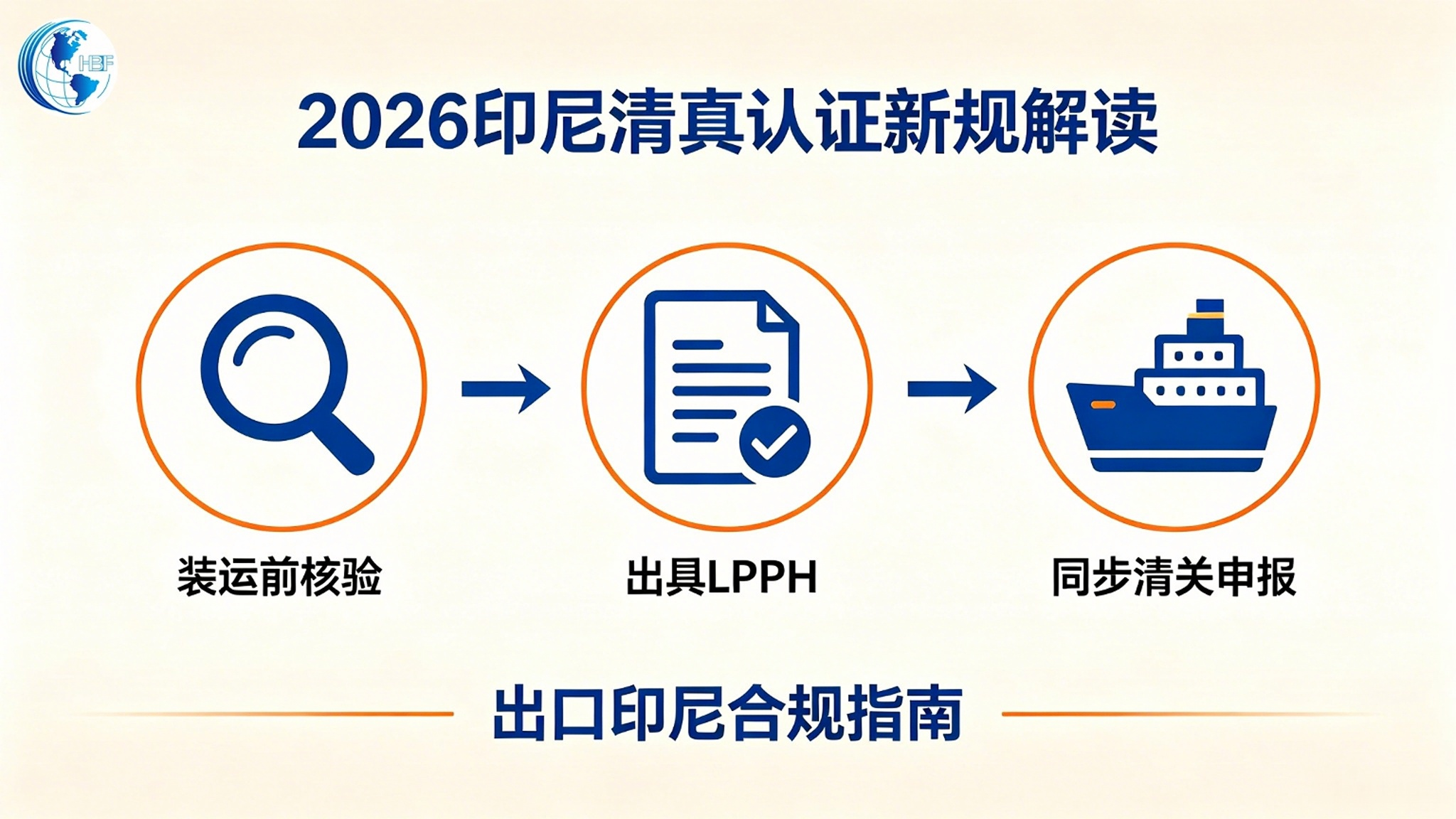
① Importer submits application → ② Selects designated inspection body → ③ Inspection body verifies application documents → ④ BPJPH issues invoice, importer pays → ⑤ Inspection schedule arranged with exporter → ⑥ Inspection conducted at loading warehouse in country of shipment/origin → ⑦ Inspection body issues LPPH → ⑧ LPPH submitted electronically to BPJPH for customs declaration
Timing Note: The importer must provide the proposed inspection schedule within 30 calendar days after payment; the inspection body generally has 15 calendar days to complete the assessment, extendable by up to another 15 days. Companies should factor this into their shipping schedules.
III. Key Timeline
| Date | Event |
|---|
| 9 September 2026 | BPJPH Regulation No. 4/2026 takes effect |
| 17 October 2026 | First major mandatory certification deadline under GR 42/2024 |
| 2026–17 October 2034 | Staggered deadlines for different product categories |
Categories subject to the first deadline on 17 October 2026 include: food and beverages, cosmetics, natural medicines, quasi-pharmaceuticals, health supplements, certain chemical and genetically engineered products, and certain consumer goods.
IV. Supporting Regulation: Non-Halal Product Labelling
BPJPH Regulation No. 3 (effective July 2026) requires:
Products containing non-halal ingredients or produced using non-halal processes must bear the label "NON-HALAL" or "THIS PRODUCT CONTAINS PORK OR LARD" on their packaging.
Existing products may remain in circulation until July 2027.
Note: Labelling a product as "non-halal" does not automatically exempt it from pre-shipment verification. Analysis of BPJPH Regulation No. 4/2026 indicates that non-halal products may still require conformity verification. It is advisable to prepare supporting documents such as CoA and CoO in advance.
V. Four Major Impacts on Chinese Exporters
Impact 1: Additional Compliance Cost per Shipment
Origin country verification fees + LPPH documentation fees. Based on Indonesia's regular halal certification costs, medium-sized enterprises pay approximately IDR 5 million per certification, while large enterprises pay approximately IDR 12.5 million, with inspection body audit fees being the main component. Since LPPH is processed separately for each shipment, export processes will lengthen, and quotations and delivery schedules will need recalculation.
Impact 2: Increased Customs Clearance Risk
Missing LPPH or mismatches with customs declaration information will affect release, potentially resulting in demurrage fees, fines, or even return of goods. If LPPH is not synchronised with the SINSW system, customs declarations cannot be submitted normally.
Impact 3: Cross-Border E-Commerce Also Affected
Halal-regulated products entering Indonesia through platforms such as Shopee and TikTok, as well as cross-border parcel channels, are equally subject to compliance requirements. Permendag 19/2026 further requires e-commerce platform sellers to disclose product country of origin, SNI certificate or registration number, and halal certificate number.
Impact 4: Cumulative Compliance Requirements
Combined with Indonesia's new e-commerce import regulations (Permendag 19/2026: cross-border sellers must provide business licences, product compliance certificates, and meet the USD 100 FOB minimum price requirement) and strict enforcement against under-declaration, the compliance threshold for exporting to Indonesia has risen across the board.
VI. Recommendations for Exporters
Recommendation 1: Immediately Audit Product Categories
Check against the GR 42/2024 list to confirm whether your products fall within the mandatory scope and their corresponding deadlines. Key focus: whether products belong to mandatory categories such as food, beverages, cosmetics, pharmaceuticals, or health supplements.
Recommendation 2: Engage LHLN Bodies Early
Select BPJPH-recognised overseas halal bodies and complete verification and LPPH processing as early as possible. Avoid the pre-October rush and reserve at least 30–45 days for the verification cycle.
Recommendation 3: Coordinate Logistics and Customs Clearance
LPPH must be synchronised with customs declarations. Integrate booking, declaration, and clearance arrangements to prevent documents and goods from becoming disconnected. Verification takes place at the loading warehouse, which must be equipped for segregation – halal and non-halal products must not be mixed.
Recommendation 4: Ensure Documents Match Physical Goods
Certificate numbers on packaging, HS codes, production codes, and production dates must be fully consistent with purchase invoices, order lists, and halal certificates. Any inconsistency may trigger verification failure.
Recommendation 5: Establish Routine Compliance Mechanisms
Since LPPH is processed per shipment, compliance is not a "one-time certification" but a "routine procedure for each consignment" . Companies with frequent shipments should incorporate pre-shipment verification into their standard export processes.
VII. Conclusion
On 9 September 2026, Indonesia's halal import compliance officially entered the "pre-shipment verification era." The shift from "a certificate is enough to enter" to "every shipment must be verified" imposes higher compliance requirements on Chinese exporters.
The underlying logic is clear: Indonesia wants to ensure that imported products are not only "halal on paper" but also "halal in reality." For food and cosmetics exporters to Indonesia, preparing in advance, engaging designated bodies, and ensuring consistency are the three fundamental paths to compliance.
With less than two months until the first mandatory certification deadline on 17 October, acting now matters more than waiting.