印尼税制与落地合规一文说清
📌 太长不看版
印尼企业所得税标准税率 22% ,中小企业和上市公司有条件更低;增值税法定税率 12% 、多数商品服务实际约 11% ;分红回国在税收协定下预提税可降到 10% ;PMA最低实缴资本 25亿印尼盾(约合人民币 115万元 上下);2026年11月1日起,电商平台将按交易总额 0.5% 代扣所得税。
本文用一套可复用框架讲清:它是什么税制、中国企业要交哪几种税、跨境怎么节税、落地怎么合规、2026年变了什么、以后遇到问题怎么判断。
一、印尼税制概览:为什么值得专门研究
中国企业出海,第一站绕不开东南亚;在东南亚里,印尼又是人口最多、市场最大、近年吸引中资最猛的国家之一。
但很多企业只算市场和订单,不算税务成本,结果在利润回流、清关、平台结算、外派员工个税这些环节反复吃亏。
印尼税制有两个底层特点值得记住:
二、三大核心税种
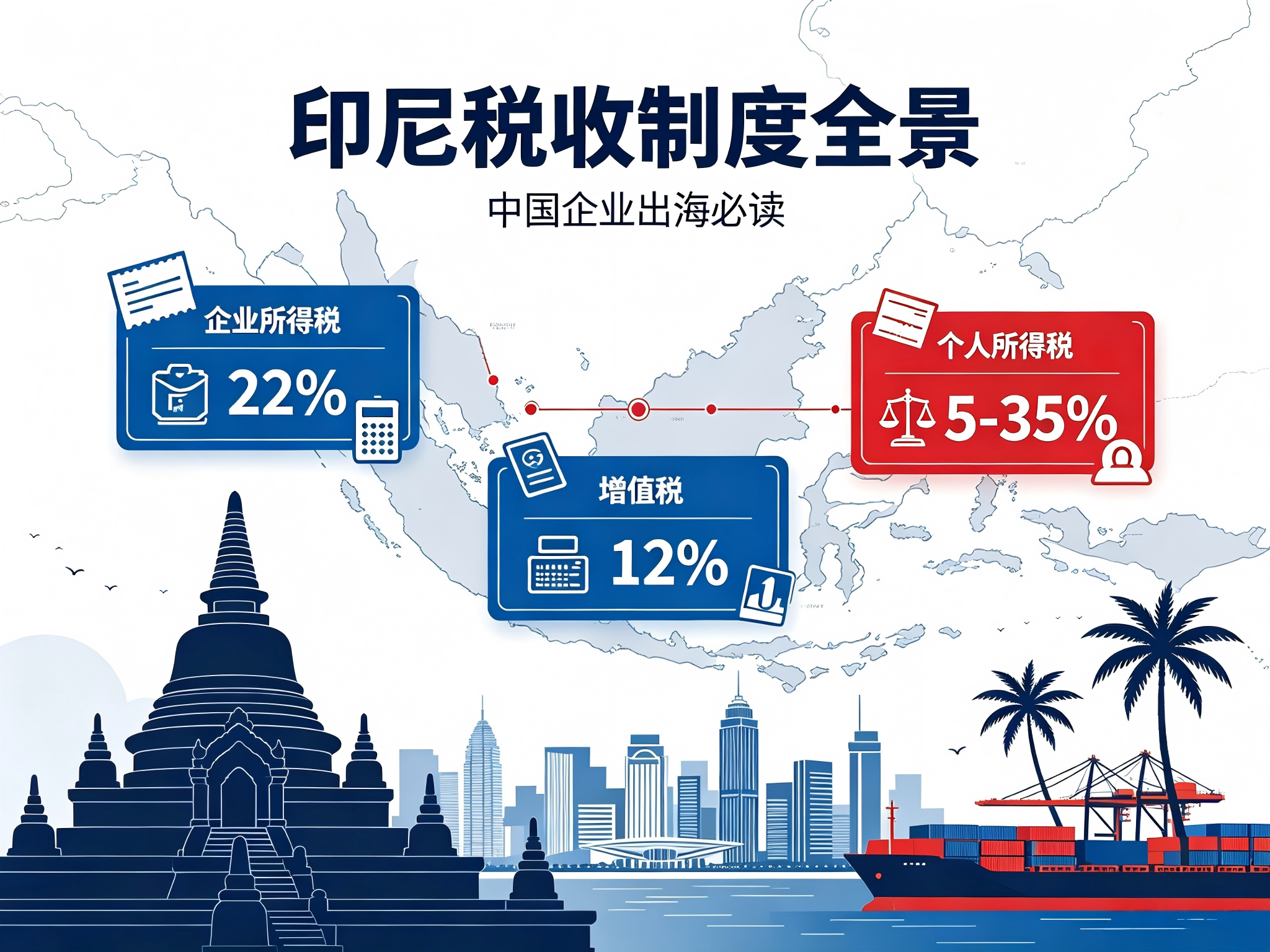
对中国出海企业来说,最常见的是这三类税。它们决定了公司经营、交易和用人的税负底色。
1. 企业所得税(PPh Badan)
| 项目 | 内容 |
|---|
| 标准税率 | 22% |
| 上市公司优惠 | 满足公众持股等条件可享 19% |
| 中小企业优惠 | 年营业额≤500亿印尼盾,对≤48亿盾部分享50%折扣(实际约 11%) |
2. 增值税(PPN / VAT)
| 项目 | 内容 |
|---|
| 法定税率 | 12%(2025年1月1日起由11%上调) |
| 实际税负 | 奢侈品适用全额12%,多数商品服务按调整后税基计征,实际约 11% |
| 出口 | 适用 0% |
3. 个人所得税(PPh 21)
五档累进税率:5%-35%
| 年应税收入(印尼盾) | 税率 |
|---|
| 0 – 6000万 | 5% |
| 6000万 – 2.5亿 | 15% |
| 2.5亿 – 5亿 | 25% |
| 5亿 – 50亿 | 30% |
| 超50亿 | 35% |
非居民适用 20% 最终税
⚠️ 三个容易忽略的细节
细节一: 增值税“名义12%”和“实际约11%”并存,是2025年增值税调整的特殊设计——税率上调但通过税基调整控制税负,2026年是否全面铺开需以财政部最新口径为准。
细节二: 企业所得税年度申报在财年结束后规定期限内完成,月度预缴与季度申报另有节奏,逾期会产生罚息。
细节三: 2026年印尼延续了部分个税由政府承担的政策,外派与本地雇员计税处理不同,聘用外籍人员前先确认其税收居民身份。

三、跨境环节:预提税与中印尼税收协定
中国企业最常见的跨境资金动作有三类:
从印尼子公司向中国母公司分红
向关联方支付利息
向中国公司支付特许权使用费或技术服务费
这三类收入在印尼国内法下都要先扣一笔预提税(PPh 26,默认 20%)。
好消息是:中国和印尼签署了 避免双重征税协定,符合条件的中国居民企业可以申请享受协定优惠税率,把多数项目的预提税率从20%降到 10%。
| 跨境所得类型 | 印尼国内法默认 | 中印尼协定优惠 |
|---|
| 股息(分红) | 20% | 10% |
| 利息 | 20% | 10% |
| 特许权使用费 | 20% | 10% |
如何享受协定优惠?
向印尼税务机关提供 中国税收居民身份证明(Certificate of Residence,即常说的COR或DGT表格)并完成备案。
很多企业栽在“材料没备齐、没能及时主张优惠”,只能按20%先扣,事后退税流程又长又麻烦。
⚠️ 特别注意“常设机构”(PE)风险
如果中国企业派员在印尼提供劳务,连续或累计超过183天,可能被认定为构成常设机构,营业利润需要在印尼纳税。
建议:海外团队派驻印尼前,先做一次常设机构风险评估。
四、落地全流程:从公司注册到日常申报
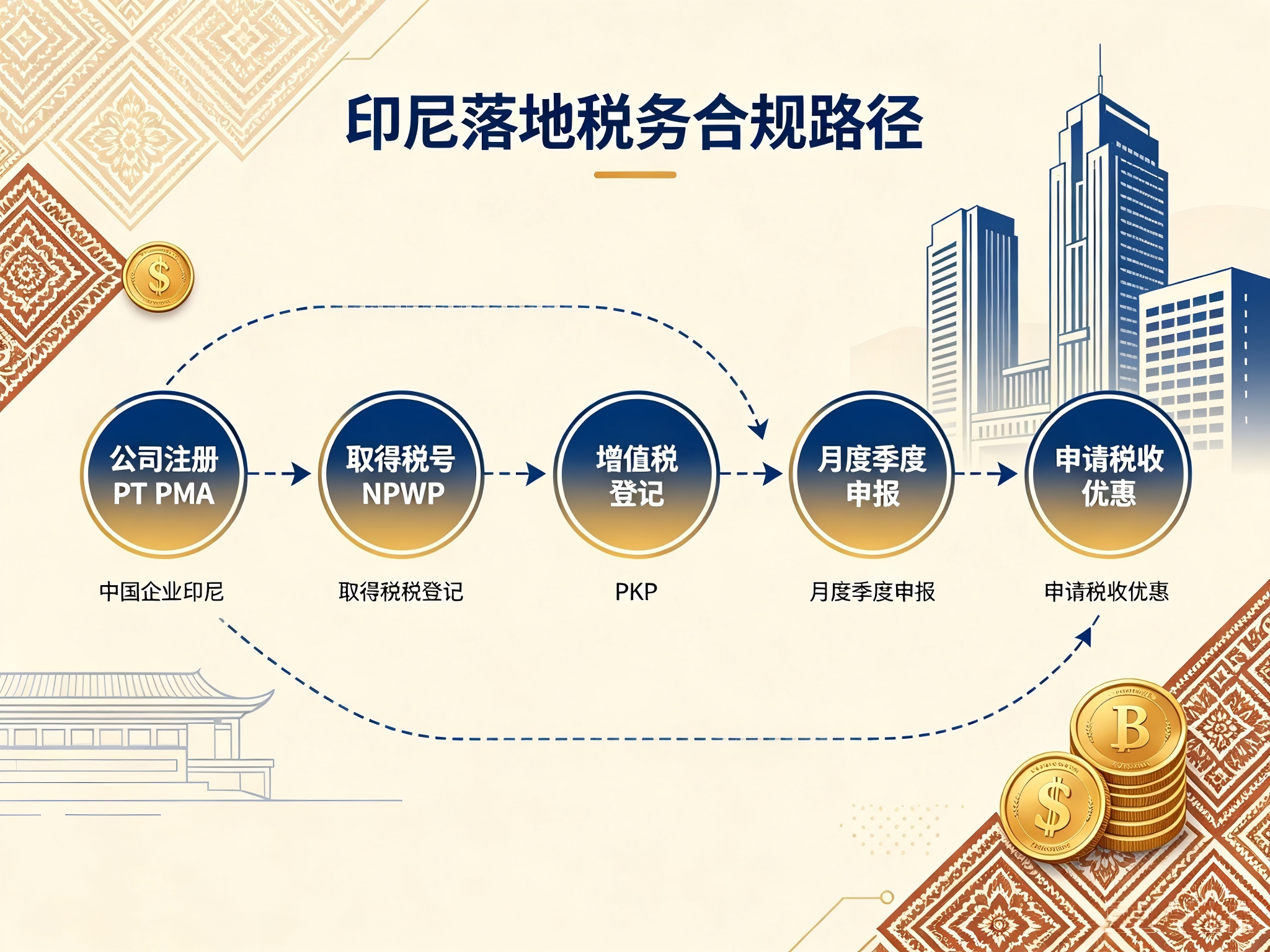
中国企业落地印尼,通常先设立 外资公司(PT PMA)。
2025年10月生效的新规(BKPM第5/2025号条例)把最低实缴资本要求从100亿印尼盾调整为 25亿印尼盾,最低总投资额一般仍为100亿印尼盾(不含土地与建筑),具体因行业而异。
落地后五步绕不开
第一步:设立实体
PT PMA(外资公司)通常需至少2名股东,部分行业存在外资持股比例限制。
第二步:税务登记
向税务局取得企业税号(NPWP),作为一切纳税义务的起点。
第三步:增值税登记
年度营业额达到约 48亿印尼盾 门槛后,需登记为增值税纳税人(PKP),此后按月度申报。
第四步:日常申报
增值税、预提税、企业所得税预缴都有固定申报期限,需建立内部台账。
第五步:申请优惠
符合条件的投资应尽早评估税收假期、税收津贴等优惠,避免错过申请窗口。
💡 征管数字化加速
印尼已推行电子发票(e-Faktur),并逐步上线核心税务管理系统(Coretax)。申报、发票、核查的数字化程度越来越高,账务不清、发票不规范的企业更容易被系统识别。
五、能申请到的税收优惠
印尼的税收优惠是东南亚里最有吸引力的部分之一,但全部需要 主动申请并持续满足条件。
| 优惠工具 | 基本内容 |
|---|
| 税收假期(Tax Holiday) | 面向“先驱产业”,投资额达标可享 5-20年 企业所得税全免,期满后再享减半 |
| 税收津贴(Tax Allowance) | 针对符合条件的资本性投资给予所得税减让、加速折旧等(按PP 78/2019等法规) |
| 超级税收扣除 | 符合条件的研发投入可享最高约 300% 税前加计扣除,职业培训类支出可享较高比例扣除 |
| 中小微企业定额税 | 符合条件的中小微企业可适用营业额一定比例的最终税(曾为0.5%);2026年新规下新设企业适用范围已收窄 |
⚠️ 重要提醒
这些优惠有严格的资格条件、申请流程和持续合规要求,且政策会动态调整。
项目立项阶段就应把优惠评估放进时间表,而不是等公司赚钱了才想起来。
六、2026年值得关注的新变化
如果你计划在2026年出海或已经在印尼运营,下面几件事和 成本直接相关:
① 增值税口径
法定税率已是12%,多数商品服务现阶段按调整后税基实际仍约11%。2026年是否全面铺开需跟踪官方口径,若铺开,成本和售价都要重新测算。
② 新设公司税率口径收紧(PP 20/2026)
2026年4月生效的新规调整了中小微企业0.5%定额最终税的使用范围,新设立的有限责任公司一般须 直接适用标准企业所得税体系,不再自动适用0.5%定额税。
③ 电商平台代扣税(PMK 37/2025)
Tokopedia、Shopee、Lazada、Blibli等平台被指定为PPh 22代扣主体,对年交易额超过5亿印尼盾的卖家 按交易总额约0.5%代扣所得税。
📌 政策已多次推迟,最新信息为 2026年11月1日起 正式执行。平台卖家和出海电商应提前做好现金流与定价测算。
④ 员工个税与征管数字化
部分个税政府承担政策延续至2026年;Coretax系统上线后申报、核查和税务争议处理都在向线上迁移。
七、五个常见误区
误区一: 以为“22%企业所得税就是全部成本”
预提税、增值税、进口环节税费、转让定价调整都可能追加成本,综合税负要全链路测算。
误区二: 觉得“税收协定自动生效”
协定优惠必须 主动备案 并提供中国税收居民身份证明,材料不齐就按20%先扣。
误区三: 认为“优惠是政策红利,申请了就能拿”
所有优惠都有资格门槛和持续合规义务,先申请、后被认定不符合条件的情况并不少见。
误区四: 跨境劳务不算税
外派员工连续驻留超过 183天 可能构成常设机构,营业利润要在印尼纳税——这点最容易被中小外贸公司忽略。
误区五: 把“名义税率”当“实际税率”
增值税12%与11%并存、中小企业50%折扣、上市公司3%减免,都要放在具体业务里才算得清。
八、企业判断框架:四步法
遇到具体税务问题,可以按 四步走:
第一步:定性
这笔收入/交易发生在境内还是跨境?涉及企业所得税、增值税、预提税还是个人税?
第二步:定量
名义税率是多少?有没有减半、折扣、免税或协定优惠可以适用?
第三步:定流程
涉及哪些登记、申报、备案动作?截止时间是什么?材料是否齐全?
第四步:定边界
这项判断依据的是哪份法规、哪个版本、哪年的口径?政策变了结论是否要改?
💡 在印尼,税务不是“交多少”的单点问题,而是 “身份→交易→申报→优惠→合规” 的全链路管理。算得清综合税负、留得住证明文件、跟得上政策变化,比单点省钱更重要。
九、写在最后:这套框架怎么用
遇到具体税务问题,先问自己四个问题:
这笔钱是境内还是跨境?
名义税率多少、有没有优惠?
要走哪些申报备案、材料齐不齐?
依据的是哪份法规哪年口径?
把这四步走一遍,绝大多数问题都能定位到该找谁、该准备什么。
本文基于印尼财政部、税务总局、投资部及公开报道整理,数据截至2026年9月;具体适用请以官方最新口径为准。
A Comprehensive Guide to Indonesia's Tax System and Compliance
📌 TL;DR (Too Long; Didn't Read)
Indonesia's standard corporate income tax rate is 22% , with lower rates available for SMEs and listed companies under certain conditions. The statutory VAT rate is 12% , but for most goods and services the effective burden remains approximately 11%. Under the tax treaty, withholding tax on dividends remitted to China can be reduced to 10%. The minimum paid‑up capital for a PT PMA is IDR 2.5 billion (roughly RMB 1.15 million). From 1 November 2026, e‑commerce platforms will withhold income tax at 0.5% of total transaction value.
This article provides a reusable framework to help you understand: what the tax system is, which taxes Chinese companies need to pay, how to optimise cross‑border tax treatment, how to stay compliant on the ground, what has changed in 2026, and how to approach tax issues in the future.
I. Indonesia's Tax System at a Glance: Why It's Worth a Close Look
For Chinese companies going global, Southeast Asia is often the first stop; and within Southeast Asia, Indonesia stands out as the most populous country, the largest economy, and one of the most aggressive in attracting Chinese investment in recent years.
However, many companies focus only on market size and orders, neglecting tax costs. As a result, they repeatedly lose out on profit repatriation, customs clearance, platform settlements, and personal income tax for expatriate employees.
Indonesia's tax system has two underlying characteristics worth remembering:
First, it is undergoing a systemic overhaul centred on the "Tax Reform Law" (UU HPP, Law No. 7 of 2021) – tax rates, administration, and digitalisation are all changing, and old knowledge can quickly become outdated.
Second, its tax incentives are among the most attractive in Southeast Asia, but all incentives must be actively applied for; they are not granted automatically.
II. The Three Core Taxes
For Chinese companies going overseas, these three taxes are the most common. They determine the baseline tax burden for business operations, transactions, and employment.
1. Corporate Income Tax (PPh Badan)
| Item | Details |
|---|
| Standard Rate | 22% |
| Listed Company Discount | 19% if public shareholding and other conditions are met |
| SME Discount | Annual turnover ≤ IDR 50 billion: 50% discount on the portion up to IDR 4.8 billion (effective rate approx. 11%) |
2. Value‑Added Tax (PPN / VAT)
| Item | Details |
|---|
| Statutory Rate | 12% (increased from 11% effective 1 January 2025) |
| Effective Burden | Luxury goods taxed at the full 12%; for most goods and services, the taxable base is adjusted so the effective rate remains approx. 11% |
| Exports | 0% |
3. Personal Income Tax (PPh 21)
Progressive rates from 5% to 35% across five brackets:
| Annual Taxable Income (IDR) | Rate |
|---|
| 0 – 60 million | 5% |
| 60 million – 250 million | 15% |
| 250 million – 500 million | 25% |
| 500 million – 5 billion | 30% |
| Above 5 billion | 35% |
Non‑residents are subject to a final withholding tax of 20% .
⚠️ Three Easily Overlooked Details
Detail 1: The coexistence of a "statutory 12%" and "effective 11%" VAT rate is a special design of the 2025 VAT adjustment – the rate was increased but the tax base was adjusted to control the burden. Whether the full 12% will be applied across the board in 2026 should be followed based on the latest official announcements from the Ministry of Finance.
Detail 2: The annual corporate income tax return must be filed within the prescribed deadline after the fiscal year‑end; monthly prepayments and quarterly filings follow their own schedules, and late payments incur interest penalties.
Detail 3: In 2026, Indonesia continues the policy of the government bearing part of the personal income tax. The tax treatment differs between expatriate and local employees, so before hiring foreign staff, their tax residency status should be confirmed.
III. Cross‑Border Aspects: Withholding Tax and the China‑Indonesia Tax Treaty
The three most common cross‑border fund flows for Chinese companies are:
Dividends from an Indonesian subsidiary to its Chinese parent
Interest paid to related parties
Royalties or technical service fees paid to a Chinese company
Under Indonesian domestic law, all three types of income are subject to withholding tax (PPh 26) at a default rate of 20%.
The good news is that China and Indonesia have signed a Double Taxation Agreement (DTA) . Eligible Chinese resident companies can apply for the treaty benefits, reducing the withholding tax rate on most items from 20% to 10% .
| Type of Cross‑Border Income | Default Indonesian Rate | Treaty Rate |
|---|
| Dividends | 20% | 10% |
| Interest | 20% | 10% |
| Royalties | 20% | 10% |
How to Claim Treaty Benefits
You must provide the Indonesian tax authorities with a Certificate of Residence (COR, also known as the DGT form) from China and complete the required filing.
Many companies fail because they do not have the documents ready in time and cannot claim the benefit upfront, so they are taxed at 20% and must go through a lengthy and cumbersome refund process later.
⚠️ Special Attention to "Permanent Establishment" (PE) Risk
If a Chinese company sends personnel to provide services in Indonesia for 183 days or more (continuously or cumulatively), it may be deemed to have a permanent establishment, and the business profits would become taxable in Indonesia.
Recommendation: Conduct a PE risk assessment before assigning overseas teams to Indonesia.
IV. Full On‑the‑Ground Process: From Company Registration to Routine Filing
Chinese companies typically establish a foreign‑owned limited liability company (PT PMA) when entering Indonesia.
New regulations effective October 2025 (BKPM Regulation No. 5/2025) reduced the minimum paid‑up capital requirement from IDR 10 billion to IDR 2.5 billion. The minimum total investment generally remains IDR 10 billion (excluding land and buildings), though this varies by industry.
Five Indispensable Steps After Landing
Step 1: Establish the Entity
A PT PMA usually requires at least 2 shareholders, and certain industries have foreign ownership restrictions.
Step 2: Tax Registration
Obtain a Taxpayer Identification Number (NPWP) from the tax office – this is the starting point for all tax obligations.
Step 3: VAT Registration
Once annual turnover reaches the threshold of approximately IDR 4.8 billion, the company must register as a VAT taxpayer (PKP) and thereafter file VAT returns monthly.
Step 4: Routine Filing
VAT, withholding tax, and corporate income tax prepayments all have fixed filing deadlines; an internal ledger system is essential.
Step 5: Apply for Incentives
Eligible investments should evaluate tax holidays, tax allowances, and other incentives as early as possible to avoid missing the application window.
💡 Digitalisation of Tax Administration
Indonesia has rolled out e‑invoicing (e‑Faktur) and is progressively implementing the core tax management system (Coretax). As filing, invoicing, and audits become increasingly digital, companies with poor bookkeeping or non‑compliant invoices are more likely to be flagged.
V. Tax Incentives Available: Not Automatic – You Must Apply
Indonesia's tax incentives are among the most attractive in Southeast Asia, but they all require active application and ongoing compliance.
| Incentive Tool | Basic Content |
|---|
| Tax Holiday | For "pioneer industries"; qualifying investments can enjoy 5‑20 years of 100% CIT exemption, followed by a 50% reduction for a further period. Specific durations depend on the latest regulations and industry category. |
| Tax Allowance | Provides CIT reductions, accelerated depreciation, etc., for eligible capital investments (under PP 78/2019 and other regulations). |
| Super Tax Deduction | Eligible R&D expenses may qualify for up to approx. 300% additional tax deduction; vocational training expenses may also enjoy higher deductions. |
| SME Final Tax | Qualifying SMEs could apply a final tax based on a percentage of turnover (previously 0.5%); however, under 2026 regulations, the scope for newly established companies has been narrowed. |
⚠️ Important Reminder
These incentives come with strict eligibility criteria, application procedures, and ongoing compliance obligations – and policies are subject to change.
Incorporate incentive evaluation into your project planning phase, not after the company has started making profits and then you remember.
VI. Notable Changes in 2026
If you plan to enter Indonesia in 2026 or are already operating there, the following changes directly affect costs:
① VAT Treatment
The statutory rate is already 12%. For most goods and services, the effective burden remains around 11% thanks to the adjusted tax base. Whether the full 12% will be universally applied in 2026 should be tracked via official announcements. If it happens, both costs and selling prices will need to be recalculated.
② Tighter Rules for New Companies (PP 20/2026)
New regulations effective April 2026 restrict the use of the 0.5% final tax for micro, small, and medium enterprises. Newly established limited liability companies are generally required to apply the standard corporate income tax regime directly and can no longer automatically use the 0.5% final tax.
③ E‑Commerce Platform Withholding Tax (PMK 37/2025)
Platforms such as Tokopedia, Shopee, Lazada, and Blibli have been appointed as withholding agents for PPh 22. For sellers with annual transaction value exceeding IDR 5 billion, platforms will withhold income tax at approximately 0.5% of total transaction value.
📌 The policy has been postponed several times; the latest information is that it will take effect from 1 November 2026. Platform sellers and cross‑border e‑commerce businesses should plan their cash flow and pricing accordingly.
④ Employee PIT and Digital Administration
The policy of the government bearing part of employee PIT continues through 2026. With the rollout of the Coretax system, filing, audits, and tax dispute handling are increasingly moving online.
VII. Five Common Misconceptions
Misconception 1: "22% CIT is the full tax cost."
In reality, withholding tax, VAT, import duties, and transfer pricing adjustments can all add to the total burden. The overall tax cost must be assessed across the entire value chain.
Misconception 2: "The tax treaty applies automatically."
Treaty benefits require active filing and provision of a Chinese tax residency certificate. Without the paperwork, you will be taxed at the 20% default rate.
Misconception 3: "Incentives are policy giveaways – just apply and you'll get them."
All incentives have eligibility thresholds and ongoing compliance obligations. It is not uncommon for applications to be filed but later found to be non‑compliant.
Misconception 4: "Cross‑border services are not taxable."
Expatriate employees staying in Indonesia for more than 183 days may create a permanent establishment, making business profits taxable in Indonesia – this is most often overlooked by small and medium‑sized trading companies.
Misconception 5: Confusing "nominal tax rates" with "effective tax rates."
The 12% vs. 11% VAT distinction, the 50% SME discount, and the 3% listed‑company reduction all must be calculated against the specific business context to arrive at the true effective rate.
VIII. A Decision Framework for Companies: How to Approach Indonesian Tax Issues
Distil the above into a reusable four‑step decision path. When you encounter a specific tax issue, follow these steps:
Step 1: Characterise
Is this income/transaction domestic or cross‑border? Does it involve corporate tax, VAT, withholding tax, or personal tax?
Step 2: Quantify
What is the nominal tax rate? Are there reductions, discounts, exemptions, or treaty benefits that can apply?
Step 3: Determine the Process
What registrations, filings, or documentation are required? What are the deadlines? Is all the paperwork in order?
Step 4: Define the Basis
Which regulation, version, and year is the basis for this determination? Would the conclusion change if the policy has since been updated?
💡 In Indonesia, tax is not a one‑point question of "how much to pay." It is a full‑chain management exercise: identity → transaction → filing → incentives → compliance. Being able to calculate the total tax burden, keep proper documentation, and stay current with policy changes matters more than saving on a single line item.
IX. Final Words: How to Use This Framework
When you face a specific tax issue, ask yourself these four questions:
Is this domestic or cross‑border?
What is the nominal rate, and are there any concessions?
What filings, declarations, or records are required – and do I have everything?
Which regulation, version, and year does this rely on?
Run through these four steps, and for the vast majority of issues, you will know who to contact and what to prepare.
This article is compiled based on information from the Indonesian Ministry of Finance, Directorate General of Taxes, Investment Coordinating Board, and public reports. Data are current as of September 2026. For actual application, please refer to the latest official announcements.