Shopee印尼站2026罚分与物流新政全解析:卖家的成本与合规双重挑战
📌 核心导读
2026年,Shopee印尼站正在经历一场从“运营激励”到“成本与合规双收紧”的系统性变革。罚分机制从单纯的经营限制升级为真金白银的财务处罚,物流运费从“一刀切”走向A至H八级差异化收费,广告门槛同步抬高。三重政策叠加之下,卖家正面临一场利润与合规的双重考验。
本文系统解析Shopee印尼站最新罚分机制的核心变化、XTRA免运费新规的计费逻辑、广告政策调整的实际影响,并分析这些新政对卖家的综合冲击与应对策略,为在印尼市场经营的卖家提供一份实操指南。
一、罚分机制:从“扣分警告”到“真金白银”
2026年,Shopee印尼站的罚分机制经历了一次质的变化——罚分不再只是“经营限制”,而是直接关联财务处罚。
1. 三大核心变化
变化一:罚分产生财务成本
根据Shopee2026年更新的罚分规则,自2026年7月起,达到特定罚分档位的卖家将被直接收取财务费用。罚分档位与对应费用如下:
| 罚分档位 | 累积罚分 | 财务处罚 |
|---|
| 档位1 | 3分 | 约100元(当地货币等价) |
| 档位2 | 6分 | 约300元 |
| 档位3 | 9分 | 约600元 |
| 档位4 | 12分 | 约1000元 |
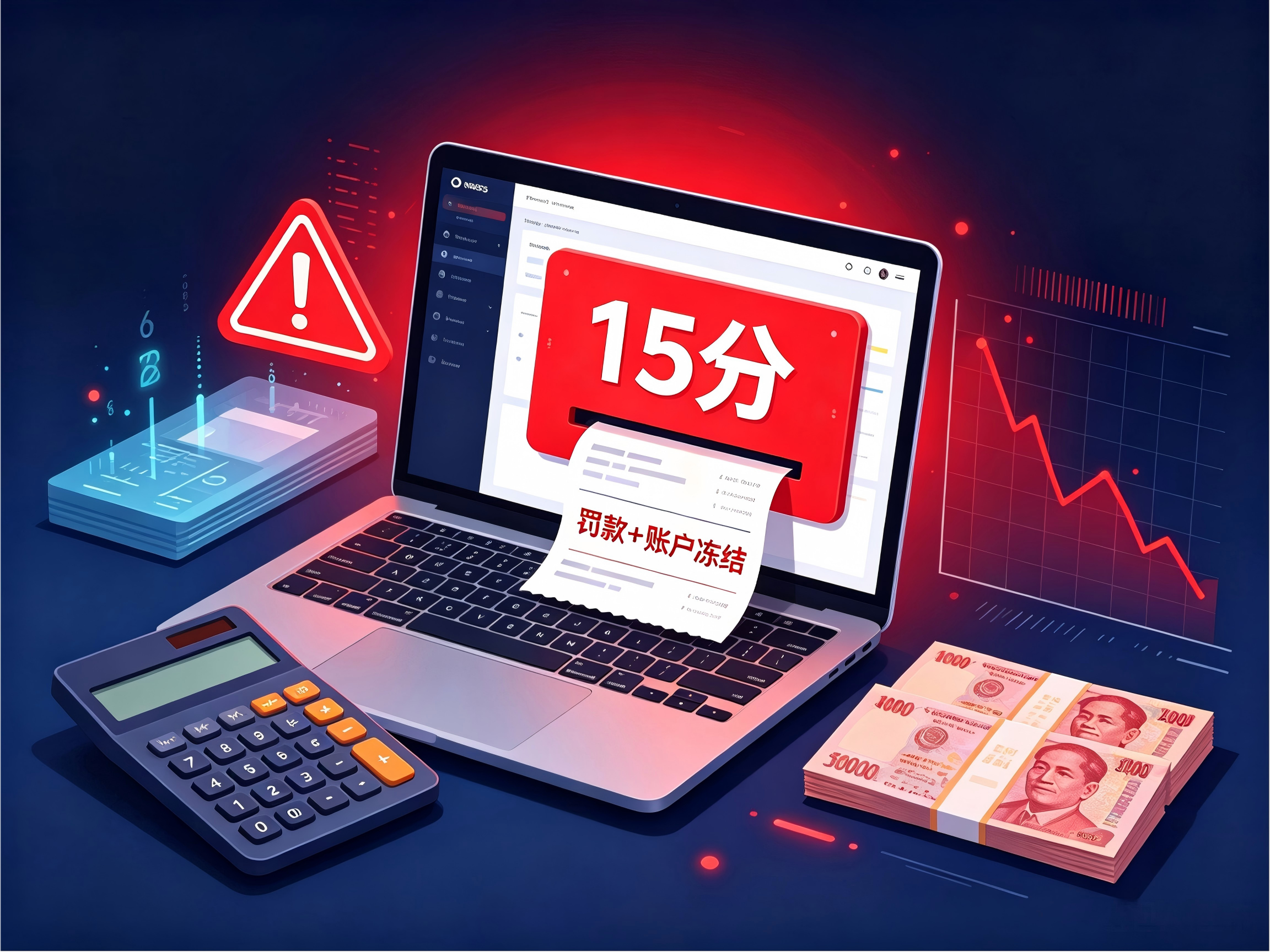
| 档位5 | 15分及以上 | 约1500元 + 账户冻结 |
注意:月GMV低于约2500元(当地货币等价)的小型卖家可豁免财务处罚。但支付罚金不会清除罚分——两者相互独立。
变化二:罚分导致流量降权
达到罚分档位的店铺,商品将面临百分比级的搜索曝光降权。从3分开始,促销活动参与资格、免运费权益、商品可见度等均可能被限制或暂停。
变化三:罚分申诉有“缓冲期”
罚分不再即时生效。罚分在每周一统一记入,对应的处罚在下一周周一才正式生效。卖家有一整周时间进行申诉。若在缓冲期内申诉成功,该笔罚分对应的惩罚将不会生效。
2. 哪些行为会触发罚分?
直播违规(2026年1月起强化)
Shopee印尼站于2026年1月22日发布公告,对直播过程中的主播行为、产品照片、标题、封面及置顶评论等环节进行违规记录,依据违规类型与频率累计积分。违规过多将导致直播中断、直播健康度下降,甚至面临直播访问权限被暂时或永久限制。用录播冒充直播将被扣除12分的严重处罚。
快速交付率(FHR)不达标(2026年5月11日起)
自2026年5月11日起,Shopee将快速交付率(Fast Handover Rate, FHR) 正式纳入卖家罚分体系。优选卖家、商城卖家及托管卖家,若FHR低于80%,平台将每周给予1分罚分。
不良包装(2026年6月22日起)
若卖家包装不良导致工作人员受伤或转运仓设备损坏,当周将直接计6分(重度违规),平台还可能采取法律措施并追究赔偿,严重违规可能导致店铺永久冻结。同一店铺当周多起违规按最严重事件计分。
订单未完成率(NFR)超标
订单未完成率(Non-Fulfillment Rate, NFR)超过20%(连续两周)将触发罚分。
罚分清零规则调整
自2025年第四季度起,季度累积罚分的清零时间由下季度首个星期一调整为当季度最后一个星期一(每年3月、6月、9月及12月的最后一个星期一)。罚分对应的惩罚周期仍按既定规则正常生效,不会因季度罚分清零而自动取消。
二、物流运费新政:XTRA免运费从“包邮”到“按单收费”
如果说罚分机制是“合规成本”,那物流运费新政就是直接的成本冲击。
1. 2026年两轮调整
第一轮:2026年5月2日——告别“一刀切”
Shopee印尼站于2026年5月2日正式推行XTRA免运费新规,核心调整为按商品尺寸分级收取服务费。旧版采用单一费率统一收取6%服务费,单笔上限4万盾。新规将所有商品重新划分为普通尺寸与特殊尺寸两大类别:
新规同时增设商家广告激励政策——符合条件的卖家最低可享受近30天总销售额3%的广告扶持额度。
第二轮:2026年12月1日——费率再升级
2026年8月,Shopee印尼本土店发布XTRA最新资费表,新规于2026年12月1日起率先适用于非商城卖家,2027年1月1日扩展至商城卖家。
核心变化包括:
| 商品类别 | 调整前费率 | 调整后费率 | 单笔上限 |
|---|
| 普通尺寸(A-G类) | 1.00%-8.00% | 1.50%-11.00% | 60,000盾 |
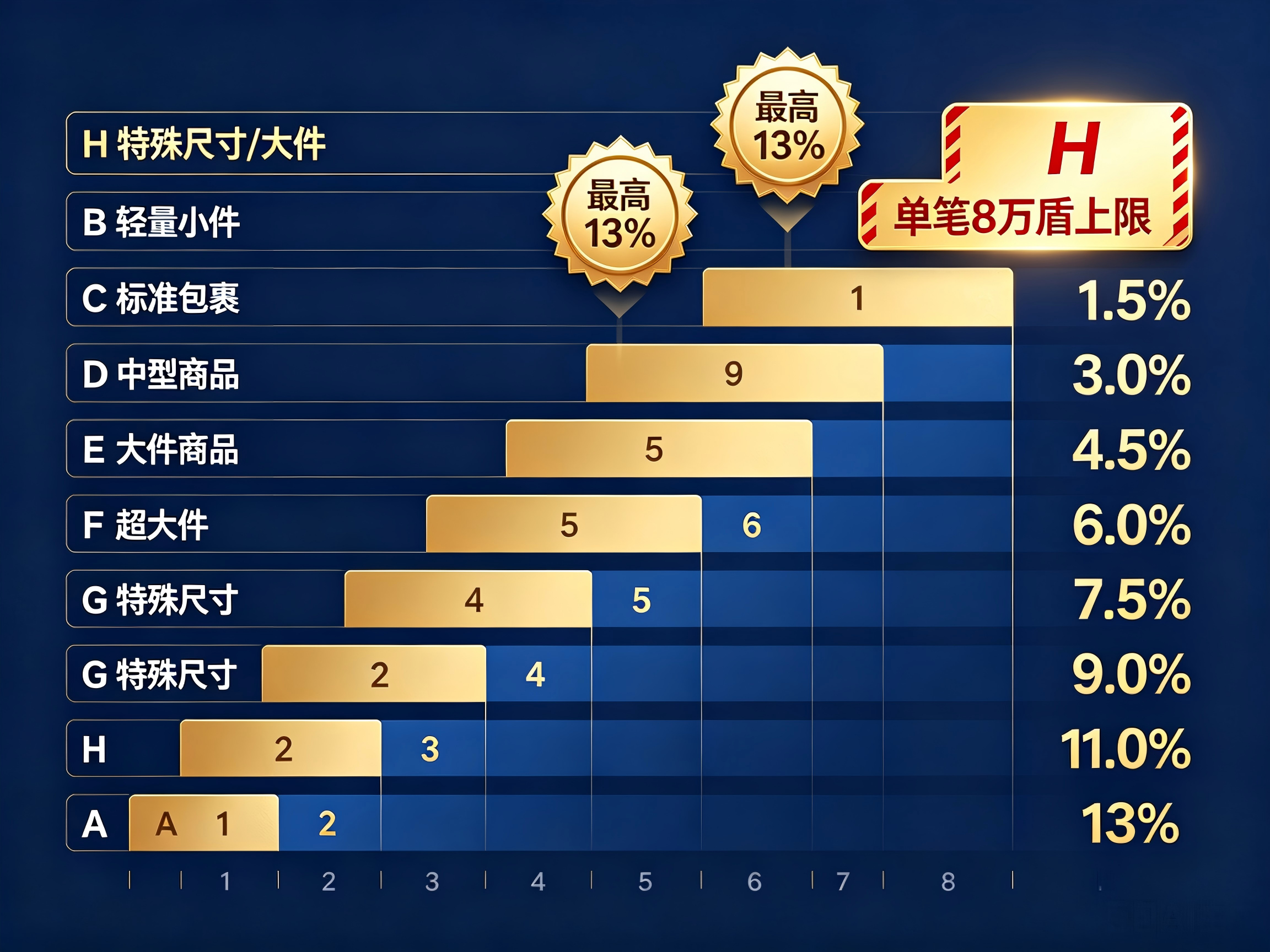
| 特殊尺寸(H类) | 2.50%-9.50% | 3.50%-13.00% | 80,000盾 |
新规按照A至H八大产品类别进行分级收取。重量≥5kg即划入特殊尺寸,大件家居、重货类产品执行更高一档费率。
2. 广告与运输成本同步上调
广告最低日预算:由2.5万印尼盾上调至10万印尼盾,涨至原来的四倍。一个月至少需要花掉300万印尼盾。
运输成本节省计划:每单费用加收170印尼盾,即收取520印尼盾。
3. 平台逻辑的转向
有卖家把各项费用加了一遍,发现免运费率上移、佣金照收、广告费随门槛抬升、运输再加一笔,综合扣点可能将超过30%。
这本质上是电商平台变现逻辑的一次转向。从Shopee最新财报来看,广告收入同比猛增70%,付费广告卖家数量增长约45%,单个卖家平均广告支出增长超过15%。平台把免运优惠和广告消耗深度绑定,用卖家的广告预算对冲平台的运费补贴成本。
三、对卖家的综合影响
1. 成本结构全面承压
2026年以来,Shopee印尼站卖家面临多重成本叠加:
行业数据显示,目前Shopee印尼站的整体扣除比例(含管理费、包邮计划、交易处理费等)已可达10%至18%的售价。XTRA新规实施后,最高13%的单项费率将直接叠加。
大件、重货卖家首当其冲。商品一旦超过5kg即被划入特殊尺寸,面临3.50%至13.00%的费率区间。
2. “可选”计划下的两难
平台将三项变化都放在“可选计划”框架下——卖家可自愿参与、随时退出。但实际运营中,卖家拥有的自由度或许并没有那么大。为了获取包邮带来的流量曝光和订单转化,卖家几乎必然会选择参与。退出的代价正在同步抬高。
3. 合规风险上升
直播违规、FHR不达标、不良包装、NFR超标——罚分来源日益多元。一旦累积到3分以上,促销资格、免运费权益、搜索曝光全面受限。合规不再是“加分项”,而是“生存线” 。
4. 汇率风险的叠加
2026年6月,印尼盾兑美元汇率跌破18,045,滑落至1998年以来最低水平,截至目前已累计下跌7%,成为东南亚表现最差的货币之一。采购用人民币结算,前端收回来的是不断贬值的印尼盾——汇率折损正在悄无声息地吞噬利润。

四、卖家应对建议
1. 重新测算单品利润
距离非商城卖家新规生效(2026年12月1日)已不足四个月。卖家应立即根据自身所属类目和商品重量重新核算综合成本,将类目费率与单笔上限直接计入定价模型。
2. 权衡XTRA参与的性价比
对比参与XTRA带来的流量增益与服务费支出,判断是否继续参加该免运项目。对于H类目的大件商品卖家,单是XTRA一项就可能吞噬超过一成的营收。
3. 建立合规运营体系
4. 善用罚分申诉缓冲期
罚分记入后有一周申诉缓冲期。若在缓冲期内申诉成功,该笔罚分对应的惩罚将不会生效。卖家应建立罚分监控机制,及时发现并处理异常罚分。
5. 考虑定价与产品策略调整
当“包邮”从免费营销工具变成按单计费的成本项之后,低价冲量模式的利润空间将被进一步压缩。依赖低价、低毛利、高周转的卖家,应重新评估印尼市场的可持续性。考虑提高客单价、优化产品结构、转向更高毛利品类。
6. 关注汇率风险
印尼盾持续疲软,卖家应考虑上调售价或引入外汇对冲手段,否则很难在年末的成本洗牌中守住利润底线。
五、结语
2026年,Shopee印尼站正在经历一场系统性的经营环境重塑。罚分机制从“经营限制”升级为“财务处罚”,物流运费从“一刀切”走向“八级差异化”,广告门槛从“低门槛”抬至“四倍起跳”。
这三重政策叠加,指向同一个趋势:印尼电商市场的“低成本红利”正在加速消失。
对于卖家而言,这不是一次简单的费用调整,而是一次经营逻辑的根本转变——从“粗放运营赚流量”转向“精细核算保利润”,从“合规靠运气”转向“合规是底线”。
距离2026年12月1日新规全面生效已不足四个月。现在就开始重新测算成本、调整定价、优化运营——这不仅是应对新政的正确姿势,更是在印尼市场长期立足的基本功。
关注汇百方国际公众号,获取更多东南亚资讯和出海解决方案
Shopee Indonesia 2026 Penalty Points & Logistics Policy Decoded: Sellers Face Dual Challenges of Cost and Compliance
📌 Key Takeaways
In 2026, Shopee Indonesia is undergoing a systemic shift from "operational incentives" to "tightening cost and compliance." The penalty‑point system has escalated from mere operational restrictions to real financial penalties. Logistics shipping fees have moved from a flat rate to an eight‑tier (A to H) differentiated charging model. Advertising thresholds have also been raised. With these three policy changes叠加, sellers are facing a dual test of profitability and compliance.
This article systematically analyses the core changes in Shopee Indonesia's latest penalty‑point mechanism, the pricing logic of the new XTRA free‑shipping rules, the impact of advertising policy adjustments, and the combined effects on sellers – along with actionable countermeasures for those operating in the Indonesian market.
1. Penalty‑Point Mechanism: From "Point Deduction Warnings" to "Real Money"
In 2026, Shopee Indonesia's penalty‑point system underwent a qualitative change – penalty points are no longer just "operational restrictions" but are now directly linked to financial penalties.
1.1 Three Core Changes
Change 1: Penalty Points Incur Financial Costs
Under Shopee's 2026 updated rules, sellers who reach specific penalty‑point tiers will be charged financial fees directly. The tier‑to‑fee mapping is as follows:
| Penalty Tier | Accumulated Points | Financial Penalty |
|---|
| Tier 1 | 3 points | ~USD 14 (local currency equivalent) |
| Tier 2 | 6 points | ~USD 42 |
| Tier 3 | 9 points | ~USD 85 |
| Tier 4 | 12 points | ~USD 140 |
| Tier 5 | 15 points or more | ~USD 200 + account freeze |
Note: Sellers with monthly GMV below approximately USD 350 (local equivalent) are exempt from financial penalties. However, paying the fine does not clear the penalty points – the two are independent.
Change 2: Penalty Points Reduce Traffic Ranking
Stores that reach a penalty tier will face percentage‑based search exposure reductions. Starting from 3 points, eligibility for promotional events, free‑shipping benefits, product visibility, and other perks may be restricted or suspended.
Change 3: Grace Period for Appeals
Penalty points are no longer effective immediately. Points are recorded weekly on Mondays, and the corresponding penalties take effect on the following Monday. Sellers have a full week to appeal. If an appeal is successful during the grace period, the penalty for those points will not be enforced.
1.2 Which Behaviours Trigger Penalty Points?
Live‑stream violations (strengthened from January 2026)
On 22 January 2026, Shopee Indonesia announced that it would record violations during live streams – covering host behaviour, product photos, titles, covers, and pinned comments – and accumulate points based on violation type and frequency. Excessive violations may lead to stream interruption, reduced live‑stream health, and even temporary or permanent suspension of live‑stream access. Using pre‑recorded footage as a live stream will result in a 12‑point severe penalty.
Fast Handover Rate (FHR) non‑compliance (effective from 11 May 2026)
From 11 May 2026, Shopee formally incorporated the Fast Handover Rate (FHR) into the penalty‑point system. Preferred Sellers, Mall Sellers, and Managed Sellers whose FHR falls below 80% will receive 1 penalty point per week.
Poor packaging (effective from 22 June 2026)
If a seller's poor packaging causes staff injury or damage to transit‑centre equipment, the seller will receive 6 points (severe violation) for that week. The platform may also take legal action and seek compensation. Severe violations may result in permanent store suspension. For multiple violations in the same week, the most serious event will determine the score.
Non‑Fulfillment Rate (NFR) exceeding threshold
An NFR exceeding 20% for two consecutive weeks will trigger penalty points.
Changes to point‑clearing rules
Starting from Q4 2025, the quarterly point‑clearing date has been adjusted from the first Monday of the next quarter to the last Monday of the current quarter (the last Monday of March, June, September, and December each year). However, penalty periods already imposed will still run their course and will not be automatically cancelled when quarterly points are cleared.
2. New Shipping Logistics Policy: XTRA Free‑Shipping Moves from "Flat Free" to "Per‑Order Charging"
If the penalty‑point mechanism represents "compliance cost," then the new shipping logistics policy is a direct cost shock.
2.1 Two Rounds of Adjustments in 2026
First round: 2 May 2026 – Farewell to "One‑Size‑Fits‑All"
On 2 May 2026, Shopee Indonesia implemented a new XTRA free‑shipping rule. The core change was to charge service fees based on product size tiers. The old system used a single flat rate of 6% with a cap of IDR 40,000 per order. The new system reclassifies all products into two main categories:
Regular‑size products: weight <5kg, max side length <60cm, volume <20,000cm³ – service fee raised to 8% , cap IDR 40,000
Oversized/special‑size products: weight ≥5kg or any dimension/volume exceeding the above – service fee raised to 9.5% , cap IDR 60,000
The new rules also introduced a seller advertising incentive – eligible sellers can receive advertising support equivalent to 3% of their total sales over the last 30 days.
Second round: 1 December 2026 – Rates upgraded again
In August 2026, Shopee Indonesia released a new XTRA fee schedule, effective from 1 December 2026 for non‑Mall sellers, and from 1 January 2027 for Mall sellers.
Key changes include:
| Product Category | Previous Rate | New Rate | Per‑Order Cap |
|---|
| Regular size (Categories A‑G) | 1.00%‑8.00% | 1.50%‑11.00% | IDR 60,000 |
| Oversized/special size (Category H) | 2.50%‑9.50% | 3.50%‑13.00% | IDR 80,000 |
The new rules charge fees based on eight product categories (A to H) . Any product weighing ≥5kg falls into the oversized category, meaning heavy and bulky products face the higher rate.
2.2 Advertising and Shipping Costs Rise Simultaneously
Minimum daily advertising budget: raised from IDR 25,000 to IDR 100,000 – a fourfold increase. This means sellers must spend at least IDR 3 million per month on ads.
Shipping cost savings programme: an additional IDR 170 per order will be charged, making the total IDR 520 per order.
2.3 The Platform's Logic Shift
One seller added up all the new costs and found that with the upward shift in free‑shipping rates, commissions unchanged, higher ad thresholds, and additional shipping charges, the total combined deduction could exceed 30% .
This essentially signals a shift in the e‑commerce platform's monetisation logic. Shopee's latest financial results show that advertising revenue surged 70% year‑on‑year, the number of paying advertisers grew about 45%, and average ad spend per seller increased by over 15%. The platform now deeply ties free‑shipping benefits to ad consumption, using sellers' advertising budgets to offset the platform's shipping subsidy costs.
3. Overall Impact on Sellers
3.1 Cost Structure Under Heavy Pressure
Since 2026, Shopee Indonesia sellers have faced multiple cost increases:
Penalty‑point financial penalties: up to ~USD 200 + account freeze
XTRA shipping tier: up to 13% single‑item rate, combined deductions may exceed 30%
Minimum ad budget: quadrupled from IDR 25,000 to IDR 100,000
Shipping cost: additional IDR 520 per order
Industry data shows that Shopee Indonesia's current overall deduction rate (including management fees, free‑shipping programme fees, transaction processing fees, etc.) can already reach 10%‑18% of the selling price. With the new XTRA rules, the maximum 13% single‑item rate will be added directly on top.
Sellers of large and heavy products are hit hardest. Any item over 5kg is classified as oversized, facing rates from 3.50% to 13.00%.
3.2 Dilemma Under "Optional" Plans
The platform presents all three changes as "optional programmes" – sellers can join voluntarily and withdraw anytime. But in practice, sellers may not have much real freedom. To capture the traffic exposure and order conversion that free‑shipping brings, sellers will almost certainly feel compelled to participate. The cost of opting out is also rising in tandem.
3.3 Compliance Risks Rising
Live‑stream violations, FHR non‑compliance, poor packaging, NFR exceedance – the sources of penalty points are becoming more diverse. Once a seller accumulates 3 points or more, promotional eligibility, free‑shipping benefits, and search exposure are all restricted. Compliance is no longer a "bonus" – it is a "survival requirement."
3.4 Exchange Rate Risks Add to the Burden
In June 2026, the Indonesian rupiah fell below IDR 18,045 against the US dollar – its lowest level since 1998 – and has since depreciated about 7%, making it one of Southeast Asia's worst‑performing currencies. With procurement in RMB and revenue in a continuously depreciating rupiah, currency erosion is silently eating into profit margins.
4. Actionable Advice for Sellers
4.1 Recalculate Per‑Product Profit Margins
With less than four months until the new rules take effect for non‑Mall sellers (1 December 2026), sellers should immediately recalculate total costs based on their specific category and product weight, and factor the category‑specific rate and per‑order cap directly into their pricing model.
4.2 Weigh the Cost‑Benefit of XTRA Participation
Compare the traffic gains from joining XTRA against the service fees paid, and decide whether to continue participating. For sellers of Category H large items, XTRA alone could consume more than 10% of revenue.
4.3 Establish a Compliance Operations System
Live‑stream compliance: ensure content is authentic; never use pre‑recorded footage as live
Packaging compliance: strengthen packaging quality to avoid 6‑point penalties
Fulfilment compliance: monitor FHR; Preferred/Mall sellers must keep it above 80%
Order management: keep NFR within 20%
4.4 Make Full Use of the Appeal Grace Period
After penalty points are recorded, sellers have a one‑week appeal window. If an appeal succeeds within that window, the corresponding penalty will not be enforced. Sellers should establish a penalty‑point monitoring mechanism to detect and address abnormal points early.
4.5 Consider Pricing and Product Strategy Adjustments
When "free‑shipping" changes from a free marketing tool to a per‑order cost item, the profit margins of low‑price, high‑volume strategies will be further squeezed. Sellers relying on low prices, low margins, and high turnover should reassess the sustainability of the Indonesian market. Consider raising average order value, optimising product mix, and shifting toward higher‑margin categories.
4.6 Hedge Currency Risks
With the rupiah continuing to weaken, sellers should consider raising selling prices or introducing forex hedging instruments – otherwise, it will be difficult to protect profit margins in the year‑end cost reshuffle.
5. Conclusion
In 2026, Shopee Indonesia is undergoing a systemic reshaping of the operating environment. Penalty points have escalated from "operational restrictions" to "financial penalties." Logistics fees have moved from a flat rate to an eight‑tier differentiated structure. Advertising thresholds have jumped fourfold.
These three policy changes point to the same trend: Indonesia's e‑commerce "low‑cost dividend" is rapidly disappearing.
For sellers, this is not a simple fee adjustment – it is a fundamental shift in business logic: from "mass operations for traffic" to "precise cost control for profit," and from "compliance by luck" to "compliance as the baseline."
With less than four months until the 1 December 2026 implementation for non‑Mall sellers, start recalculating costs, adjusting pricing, and optimising operations now – this is not only the right response to the new policies, but also the essential foundation for long‑term survival in the Indonesian market.