印尼海关AI审单全面解析:从人工到智能的监管革命
📌 核心导读
2026年,印尼海关监管体系迎来历史性变革——“X光扫描+人工智能(AI)研判”双重查验系统正式上线。这一变革将印尼海关从“人工经验判断”推向“数据驱动精准锁定”的新阶段。
本文系统解析印尼海关启用AI审单的深层原因、给进出口报关带来的实际变化、申报错误可能引发的严重后果,以及2026年最新的报关规范要求,为出口印尼的企业和跨境电商卖家提供一份合规通关指南。

一、印尼海关为何启用AI审单?
1. 历史痛点:人工审单的“三大顽疾”
在AI系统上线之前,印尼海关长期依赖人工审单模式,存在三大系统性缺陷:
HS编码归类错误频发。 印尼海关税则目录(BTKI)包含超过1万个税号。在人工环境下,报关行(PPJK)解读数据、海关官员核验数据——这个链条脆弱且容易出错。一个数字的归类错误,可能导致100%的未缴税款罚款,极端情况下货物可能因“禁止与限制”(Lartas)规定被全部没收。
“红色通道”与滞港费螺旋上升。 当人工文档不一致或模糊时,海关风险管理算法会触发实物查验,增加3至7天的通关时间,并产生大量港口仓储费和集装箱滞期费。2025年,人工错误估计给印尼造成了约4.5亿美元的不必要物流成本。
信息孤岛与透明度缺失。 船公司、码头运营商、仓库和海关之间的数据长期存在于各自孤立的信息系统中,货主无法实时了解货物为何滞留。
2. 腐败丑闻的“催化剂”
2026年2月,印尼反腐败委员会(KPK)破获了一起海关高层勾结物流公司篡改风险系统参数、受贿913亿印尼盾的特大腐败案。这一丑闻成为海关改革的直接导火索。印尼总统普拉博沃在内阁集训中对税务与海关系统发出严厉警告。财政部长普尔巴亚向海关总署发出“最后通牒”:如果一年内海关工作没有明显改善,将由瑞士通用公证行(SGS)接管相关工作,届时约1.6万名海关工作人员可能被停职处理。
3. 技术赋能:三大AI工具落地
2025年12月12日,财政部长普尔巴亚在雅加达丹戎不碌港正式启用三项技术创新:
X光集装箱扫描仪(带辐射门户监测器RPM) :可在不开箱的情况下快速、准确、安全地检测货物,直接提升运营效率。
SSR-Mobile自助申报应用:集成在CEISA 4.0移动应用中,具备地理标签、实时记录和AI风险分析功能,企业可自主完成进场、装箱、卸货至出场的全流程操作。
TradeAI系统:专门用于检测低报、高报和基于贸易的洗钱行为。系统将海关价值与基准价格比对——包括从国内外电商平台抓取的数据——使官员能够快速发现少缴税款。系统还将集成CEISA 4.0,配备海关价值分析、商品分类和文件验证功能。
4. 增收实效:试用即见成效
TradeAI的初步试用审查了约140-150份进口报关单,发现了约12亿印尼盾的额外税收。财政部长表示:“仅凭这些,我就轻松收集了约10亿印尼盾。”政府计划再投资约450亿印尼盾将系统推广至全国。
二、AI审单给进出口报关带来了什么变化?
1. 从“概率抽查”到“精准锁定”
过去海关查验是“概率问题”——被抽中查验全凭运气。现在变成了“高确定性被查”。AI系统在分钟级别内快速比对货物的实际物理特征(如密度、体积)与申报的货值、重量数据,一旦发现异常偏离,系统自动触发警报。以往可能需要数天才能发现的疑点,现在可能在卸船前就已标记。
2. 查验率大幅提升
2026年,印尼海关查验率经历了显著跃升:
| 货物类别 | 此前查验率 | 2026年查验率 |
|---|
| 普货 | 10% | 25%以上 |
| 敏感品类(3C、服装、美妆、食品、母婴等) | — | 100% |
敏感品类100%开箱查验,不仅核查货物数量,更对认证文件(如SNI认证、BPOM认证等)与申报信息进行逐项核验。
3. 通关时效:冰火两重天
合规货物更快。 通过将AI清关与NLE单一入口整合,印尼已将全国平均货物停留时间从2023年的4.8天缩短至2026年初的2.4天以下。
异常货物更慢。 合规货物3-7天可清关,异常货物最长可达30天。
4. 集中审核,人工干预空间被大幅压缩
X光+AI双重检测系统上线后,审核走向集中化,人工干预的空间被大幅压缩。海关总署的回应是已经开展改进工作。有货代反映,三宝垄港的海关工作人员已经“大换血”。
三、申报错误的后果:AI不会“手下留情”
1. 直接经济损失
补税与罚款。 申报细节一旦出错,会直接触发海关风控机制,引发补税、行政罚款甚至整票货物退运。在丹戎不碌港,货物滞留24小时即产生230美元滞期费;滞留10天,海关信用额度将被冻结30天。货物可能面临2.5倍未缴税款罚款。
HS编码错一位,整票都可能退运。 印尼使用9到10位的HS编码,归类错一个数字,轻则转入红色通道,重则直接退运。
2. 货物被扣、被拍卖
超30天:产生仓储费。 根据2025年第92号财政部长条例,存放在海关临时存储处超过30天的进口货物被视为无主货物,需转移至海关仓库并收取仓储费。
超90天:被拍卖或销毁。 货物在转移到海关仓库后60天内仍未履行海关义务的,将被拍卖、销毁或归为国家所有。
3. 合规污点与经营风险
申报错误可能触发海关“黑历史”记录,企业被列入重点监管名单。对于跨境电商卖家而言,货物延误可能导致:
海运延误导致旺季断货
履约延迟造成买家拒收或取消订单
店铺评分下滑,影响流量与转化
供应链被打断,出现至少1个月的波动周期
4. 最严重的后果:失去印尼市场
SNI认证缺失的处罚尤其严厉。 只要产品在SNI强制目录内,无证违规的后果包括:
货物被海关扣留、退运甚至销毁
最高可处20亿印尼盾罚款
相关进口商和制造商被实施1到3年的进口禁令
电商平台店铺被直接下架、封号
一次违规,就可能彻底失去印尼市场。
四、2026年印尼报关的规范要求与标准
1. “三单一致”:从“加分项”变成“必选项”
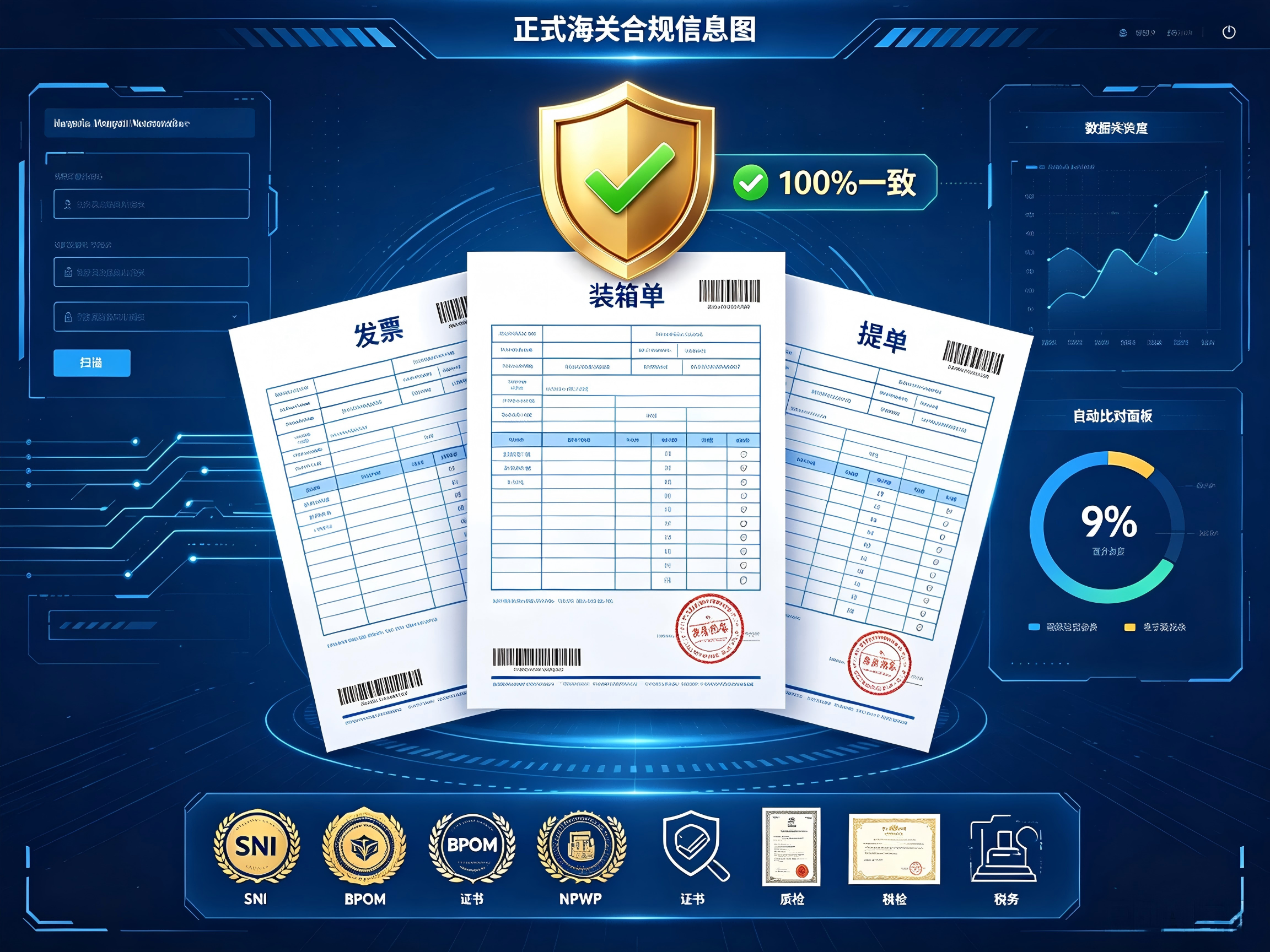
2026年,印尼海关实施 “单单一致、单货一致、单证一致” 三重核查机制。发票、箱单、提单三单一致已从“加分项”变成“必选项”,任何微小的单证差异都可能导致货物被扣、罚款甚至退运。7月4日起,单证数据实行100%强制统一核验——商业发票、装箱单、海关申报单、提单的HS编码、品名、数量、目的港信息必须完全一致,一字不符直接扣柜。海关报关资料、进口许可及检验报告三者数据也必须一致,并通过INATRADE及印尼国家单一窗口系统进行电子比对。
2. 必备资质与文件
进口商资质:
产品准入认证:
3. HS编码精准归类
印尼使用9到10位的HS编码系统。强烈建议进口商在货物发运前,向印尼海关总署提交 “商品归类预裁定” 申请,以确保HS编码具有法律确定性。
4. 货值申报的“合理性”审查
海关稽查已延伸到“合理性”审查——申报价格是否明显低于行业平均水平。AI系统会比对国内外电商平台的基准价格。货值与市场均价偏差超过15%,将触发强制二次核查和成本证明要求。
5. 实操建议清单
| 序号 | 建议事项 | 具体要求 |
|---|
| 1 | 确保三单一致 | 发票、箱单、提单、申报单的HS编码、品名、数量完全统一 |
| 2 | 确认产品准入资质 | 核实是否需要SNI、BPOM、清真等认证,提前办理 |
| 3 | 如实申报货值 | 按CIF口径申报,偏差不超过市场均价15% |
| 4 | HS编码预裁定 | 发运前申请商品归类预裁定 |
| 5 | 备齐全套单证 | 商业发票需领馆认证,单证缺一不可 |
| 6 | 选择合规服务商 | 委托在印尼海关注册备案的货代/清关行 |
| 7 | 提前备货至海外仓 | 降低清关延误对末端履约的影响 |
五、结语
2026年,印尼海关正在经历一场从 “人工经验”到“智能数据” 的深刻变革。X光+AI双重查验系统、TradeAI智能审价、CEISA 4.0电子申报——三项技术叠加,将印尼海关的监管能力推向了一个全新的高度。
对于出口印尼的中国企业和跨境电商卖家而言,这场变革意味着:
合规不再是“可选项”,而是“必选项”。 过去靠低报、瞒报、模糊申报蒙混过关的操作空间正在被快速压缩。AI系统不会“手下留情”——数据异常会被分钟级识别,申报错误会触发连锁后果。
“三单一致”是底线,不是上限。 任何微小的单证差异都可能付出沉重代价。
提前规划、合规经营、本土化深耕——这不仅是穿越印尼海关监管周期的通行证,更是在印尼市场长期立足的根本。
正如财政部长普尔巴亚所言:“海关数字化转型不是选项,而是必然。我们必须维护公众信任,保障经济竞争力,以更现代的方式打击走私。”

联系我们, 关注汇百方国际公众号, 获取更多印尼资讯和出海印尼解决方案.
Indonesia Customs AI Auditing Fully Explained: From Manual to Intelligent Regulatory Revolution
📌 Key Takeaways
In 2026, Indonesia's customs supervision system underwent a historic transformation – the "X-ray scanning + Artificial Intelligence (AI) analysis" dual inspection system was officially launched. This reform moves Indonesian Customs from "manual experience-based judgment" to ">This article provides a systematic analysis of the reasons behind Indonesia Customs' adoption of AI auditing, the actual changes it brings to import/export declaration processes, the serious consequences of declaration errors, and the latest customs declaration compliance requirements for 2026 – offering a practical clearance guide for companies exporting to Indonesia and cross-border e-commerce sellers.

1. Why Did Indonesia Customs Adopt AI Auditing?
1.1 Historical Pain Points: The "Three Chronic Issues" of Manual Auditing
Before the AI system went live, Indonesia Customs had long relied on manual auditing, which suffered from three systemic flaws:
Frequent HS code classification errors. Indonesia's Customs Tariff Book (BTKI) contains more than 10,000 tariff headings. In the manual environment, customs brokers (PPJK) interpret the data, and customs officers verify it – a fragile chain prone to mistakes. A single digit error in classification can result in a 100% penalty on unpaid duties, and in extreme cases, goods may be fully confiscated under "prohibited and restricted" (Lartas) regulations.
The "Red Channel" and spiralling demurrage fees. When manual documentation is inconsistent or ambiguous, the customs risk management algorithm triggers physical inspection, adding 3 to 7 days to clearance times and generating significant port storage charges and container demurrage fees. In 2025, manual errors were estimated to have cost Indonesia about USD 450 million in unnecessary logistics costs.
Information silos and lack of transparency. Data from shipping lines, terminal operators, warehouses and customs long existed in separate, isolated systems, leaving cargo owners unable to know in real time why their goods were being held.
1.2 Corruption Scandals as a "Catalyst"
In February 2026, Indonesia's Corruption Eradication Commission (KPK) uncovered a major corruption case in which customs officials colluded with logistics companies to manipulate risk system parameters and accepted bribes totalling IDR 91.3 billion. This scandal became a direct trigger for customs reform. President Prabowo Subianto issued stern warnings to the tax and customs apparatus during a cabinet training session. Finance Minister Sri Mulyani Indrawati gave the Directorate General of Customs and Excise an "ultimatum": if customs performance did not show significant improvement within one year, the Swiss inspection giant SGS would take over operations, potentially putting about 16,000 customs staff out of work.
1.3 Technology Enables: Three AI Tools Deployed
On 12 December 2025, Finance Minister Sri Mulyani officially launched three technological innovations at Tanjung Priok Port in Jakarta:
X-ray container scanners (with Radiation Portal Monitors – RPM): Enable fast, accurate and safe inspection of cargo without opening containers, directly improving operational efficiency.
SSR-Mobile self-declaration application: Integrated into the CEISA 4.0 mobile app, featuring geo-tagging, real-time recording and AI risk analysis. Enterprises can autonomously complete the entire process from entry, stuffing and unloading to exit.
TradeAI system: Specially designed to detect under-declaration, over-declaration and trade-based money laundering. The system compares declared values with benchmark prices – including data scraped from domestic and international e-commerce platforms – enabling officers to quickly identify underpaid duties. The system will also be integrated with CEISA 4.0, with functions for customs value analysis, commodity classification and document verification.
1.4 Tangible Revenue Gains Even in Trial
The initial trial of TradeAI reviewed about 140-150 import declarations and identified approximately IDR 1.2 billion in additional duties. The Finance Minister commented: "Just from that, I easily collected about IDR 1 billion." The government plans to invest an additional IDR 45 billion to roll out the system nationwide.
2. What Changes Has AI Auditing Brought to Import/Export Declarations?
2.1 From "Random Spot Checks" to "Precision Targeting"
In the past, customs inspections were a matter of "probability" – being selected depended largely on luck. Now it has become "high-certainty targeting." The AI system rapidly compares the actual physical characteristics of goods (such as density and volume) against declared value and weight data within minutes. Once an abnormal deviation is detected, the system automatically triggers an alert. Suspicious points that might have taken days to uncover can now be flagged before a ship is even unloaded.
2.2 Inspection Rates Have Significantly Increased
In 2026, Indonesia Customs' inspection rates have undergone a notable surge:
| Cargo Category | Previous Rate | 2026 Rate |
|---|
| General cargo | 10% | 25% or more |
| Sensitive categories (3C electronics, apparel, cosmetics, food, baby products, etc.) | — | 100% |
Sensitive categories are subject to 100% physical inspection, which not only checks quantities but also verifies certification documents (such as SNI, BPOM, etc.) against declaration information item by item.
2.3 Clearance Times: A Tale of Two Extremes
Compliant goods move faster. By integrating AI clearance with the National Logistic Ecosystem (NLE) single-entry system, Indonesia has reduced the average national cargo dwell time from 4.8 days in 2023 to under 2.4 days in early 2026.
Non-compliant goods move slower. While compliant goods can clear in 3-7 days, problematic shipments can take up to 30 days.
2.4 Centralised Auditing, Sharply Reduced Scope for Manual Intervention
With the X-ray + AI dual inspection system online, auditing has become centralised, and the room for manual intervention has been greatly compressed. The Customs Directorate General has responded by implementing improvement measures. Freight forwarders have reported that customs staff at Tanjung Emas Port in Semarang have been "massively replaced."
3. Consequences of Declaration Errors: AI Does Not "Go Easy"
3.1 Direct Financial Losses
Supplementary duties and penalties. Any minor error in declaration details will directly trigger the customs risk control mechanism, leading to supplementary duties, administrative fines, or even the return of the entire shipment. At Tanjung Priok Port, a 24-hour delay incurs a demurrage fee of USD 230; if the delay extends to 10 days, the customs credit limit may be frozen for 30 days. Goods may also face fines of up to 2.5 times the unpaid duties.
One wrong digit in the HS code, and the entire shipment may be returned. Indonesia uses 9-to-10-digit HS codes. A single digit misclassification can either push the shipment into the Red Channel or, in serious cases, result in its return.
3.2 Goods Detained or Auctioned
Exceeding 30 days: Storage fees apply. According to Finance Minister Regulation No. 92/2025, imported goods stored in temporary customs storage for more than 30 days are deemed unclaimed and must be transferred to customs warehouses, where storage fees will be charged.
Exceeding 90 days: Goods are auctioned or destroyed. If customs obligations are not fulfilled within 60 days after transfer to a customs warehouse, the goods may be auctioned, destroyed or forfeited to the state.
3.3 Compliance Black Marks and Business Risks
Declaration errors can trigger a "black mark" record with customs, placing the enterprise on a heightened monitoring list. For cross-border e-commerce sellers, cargo delays can result in:
Stock-outs during peak seasons due to shipping delays
Buyer rejection or order cancellations caused by delayed fulfilment
Declining store ratings, affecting traffic and conversion
Supply chain disruption cycles lasting at least one month
3.4 The Most Severe Consequence: Losing the Indonesian Market
Penalties for missing SNI certification are especially harsh. For any product falling under the mandatory SNI list, non-compliance can lead to:
Goods detained, returned or even destroyed by customs
Fines of up to IDR 2 billion
Import bans of 1 to 3 years imposed on the relevant importers and manufacturers
E‑commerce store directly taken down and deactivated
One single violation could result in permanent loss of access to the Indonesian market.
4. Indonesia Customs Declaration Compliance Requirements and Standards for 2026
4.1 "Three Documents Matching": From "Nice-to-Have" to "Must-Have"
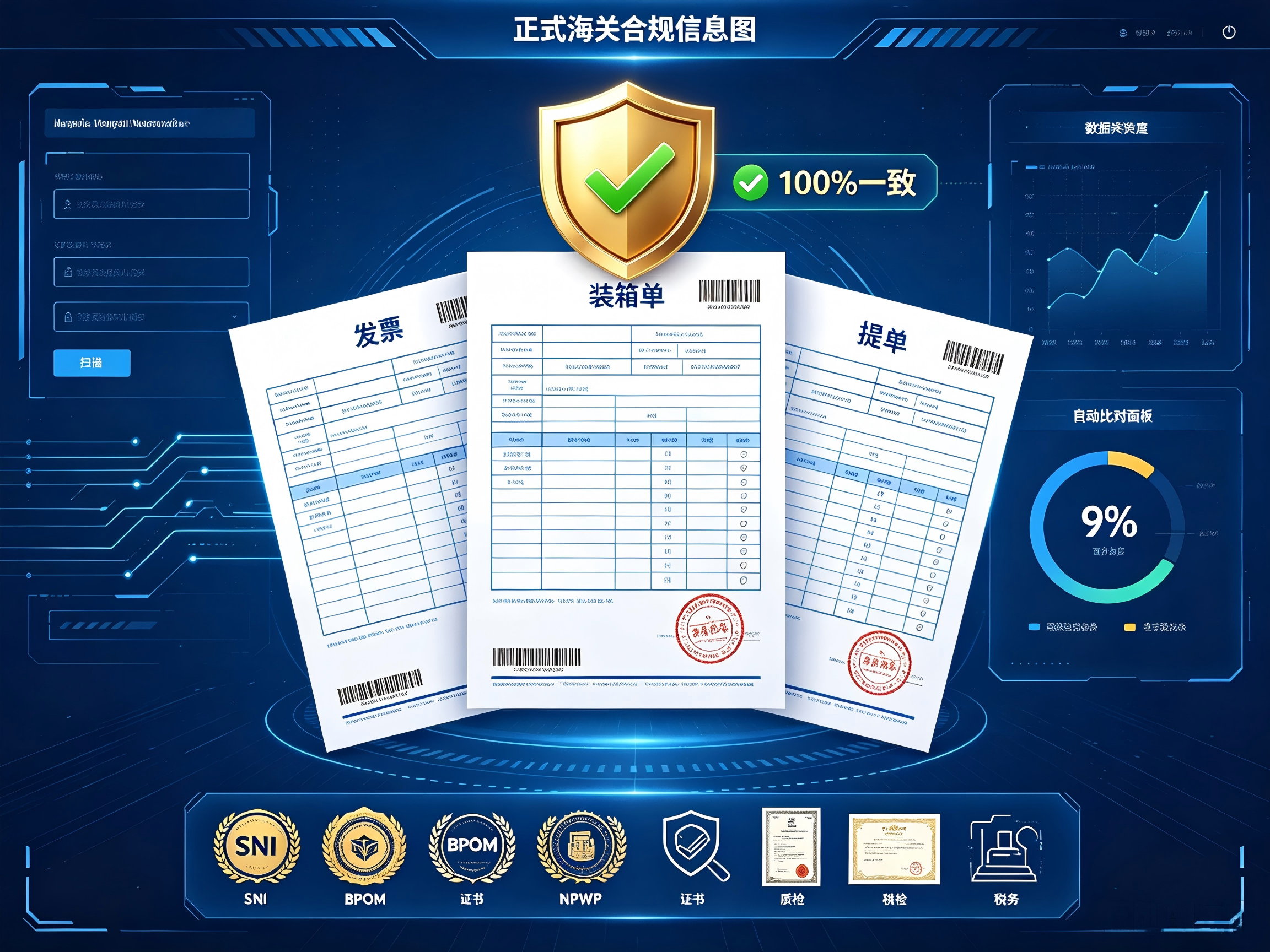
In 2026, Indonesia Customs introduced a "document-document matching, document-goods matching, and document-certificate matching" triple verification mechanism. The alignment of invoices, packing lists and bills of lading has evolved from "nice-to-have" to "must-have." Any minor discrepancy in documents can lead to detention, fines or even return of goods. From 4 July, document data has been subject to 100% mandatory unified verification – the HS codes, product descriptions, quantities and port-of-destination information on commercial invoices, packing lists, customs declarations and bills of lading must be perfectly consistent; any mismatch will trigger immediate container detention. Furthermore, customs declaration documents, import permits and inspection reports must all align with each other and undergo electronic comparison through the INATRADE and Indonesia National Single Window systems.
4.2 Required Licences and Documents
Importer qualification:
NIB (Business Identification Number): Required for all importers
NPWP (Tax Registration Number): All import/export goods must be linked to the Indonesian tax ID of the actual consignee or consignor
API (Importer Identification Number): Required for specific product categories
Import Permit (PI) : Required for certain goods
Product access certifications:
SNI certification: Mandatory for products covered by the mandatory SNI list (e.g., electronics)
BPOM certification: Required for food, cosmetics, pharmaceuticals, etc. (subject to Indonesian FDA clearance)
Halal certification: Required for certain foods and cosmetics
SPPT market access permit: Applied for via the SIINAS system
4.3 Precise HS Code Classification
Indonesia uses a 9-to-10-digit HS code system. Importers are strongly advised to apply for a "Binding Tariff Information" (BTI) ruling from the Directorate General of Customs and Excise before shipping goods, to ensure legal certainty on HS classification.
4.4 "Reasonableness" Review of Declared Values
Customs audits have extended to "reasonableness" reviews – whether the declared price is significantly below industry averages. The AI system compares declared values against benchmark prices from domestic and international e‑commerce platforms. If the declared value deviates by more than 15% from the average market price, it will trigger a mandatory secondary review and a requirement to provide cost justification documentation.
4.5 Practical Compliance Checklist
| No. | Recommended Action | Specific Requirements |
|---|
| 1 | Ensure "Three Documents Matching" | HS codes, product descriptions and quantities on invoices, packing lists, bills of lading and declarations must be perfectly aligned |
| 2 | Verify product access qualifications | Confirm whether SNI, BPOM, Halal or other certifications are required and obtain them in advance |
| 3 | Declare value truthfully | Declare on a CIF basis, deviation from market average not exceeding 15% |
| 4 | Apply for BTI ruling | Request a binding tariff information ruling before shipment |
| 5 | Prepare full documentation | Commercial invoices must be legalised by the consulate; all documents must be complete |
| 6 | Choose compliant service providers | Engage freight forwarders/customs brokers registered with Indonesia Customs |
| 7 | Pre-stock in overseas warehouses | Mitigate the impact of clearance delays on end‑delivery |
5. Conclusion
In 2026, Indonesia Customs is undergoing a profound transformation – from "manual experience" to "intelligent data" . The X-ray + AI dual inspection system, TradeAI intelligent valuation, and CEISA 4.0 electronic declaration – three technologies combined – have lifted Indonesia Customs' enforcement capabilities to an entirely new level.
For Chinese companies exporting to Indonesia and cross‑border e‑commerce sellers, this reform means:
Compliance is no longer an "option" – it is a "necessity." The room for manoeuvre that once existed through under‑declaration, mis‑declaration or vague declarations is rapidly shrinking. The AI system will not "go easy" – data anomalies are identified in minutes, and declaration errors trigger cascading consequences.
"Three Documents Matching" is the baseline, not the ceiling. Any minor discrepancy can be costly.
Advance planning, compliant operations and deep localisation – these are not only the passports to navigating Indonesia's customs supervision cycle but also the foundation for long‑term success in the Indonesian market.
As Finance Minister Sri Mulyani stated: "Digital transformation of customs is not an option – it is an imperative. We must maintain public trust, safeguard economic competitiveness and combat smuggling in a more modern way."