印尼国庆日81周年全景解读:历史、风俗、假期与经济社会影响全分析
📌 核心导读
2026年8月17日,印度尼西亚迎来独立81周年纪念日。本届国庆以“印尼主权、公正与繁荣”为主题,从8月1日全国祈祷会启幕,到8月17日独立宫升旗仪式达到高潮,再到8月17日晚上的无人机表演和视频映射收官,庆典活动贯穿整个八月。本文系统梳理印尼国庆日的来龙去脉——从1945年苏加诺宣读独立宣言的历史瞬间,到遍布全国的传统文化活动,再到假期对电商、进出口贸易和物流清关的连锁影响,为关注印尼市场的读者提供一份全景式参考。
一、历史背景:1945年8月17日的独立宣言
1. 独立宣言的诞生
1945年8月17日,苏加诺(Soekarno)和穆罕默德·哈达(Mohammad Hatta)在雅加达苏加诺住宅前宣读《独立宣言》(Proklamasi Kemerdekaan Indonesia),正式宣告印度尼西亚共和国成立。
这份宣言的诞生并非偶然。早在日本占领荷属东印度期间,占领地政府于1945年3月邀请当地独立运动领袖参加独立准备调查会,开始为印尼独立打下法律基础。1945年6月1日,苏加诺发表著名的“印尼建国五原则”(Pancasila)——民族主义、人道主义、民主、社会公平和信仰神道。两个多月后,随着日本投降,印尼独立运动领袖抓住历史机遇,一举宣告独立。
独立宣言宣读后,印尼随即在全国范围内掀起了 “八月革命” 的高潮。8月18日,印尼独立筹备委员会批准印尼共和国宪法,推举苏加诺和哈达为正、副总统。此后数年间,印尼经历了与荷兰殖民者的反复斗争,直到荷兰最终承认1945年8月17日为印尼独立日。
2. 2026年:第81个独立日
2026年是印尼独立81周年。本届国庆的主题定为 “印尼主权、公正与繁荣” (Indonesia Berdaulat, Adil, dan Makmur)。这一主题不仅是对独立精神的传承,更反映了印尼政府当前的发展方向——强化国家主权、推动公平发展、提升全民福祉。
二、节日风俗:从庄严仪式到全民狂欢
印尼国庆日的庆祝活动呈现出 “官方庄重、民间热烈” 的双重特征。
1. 官方仪式:独立宫的庄严时刻
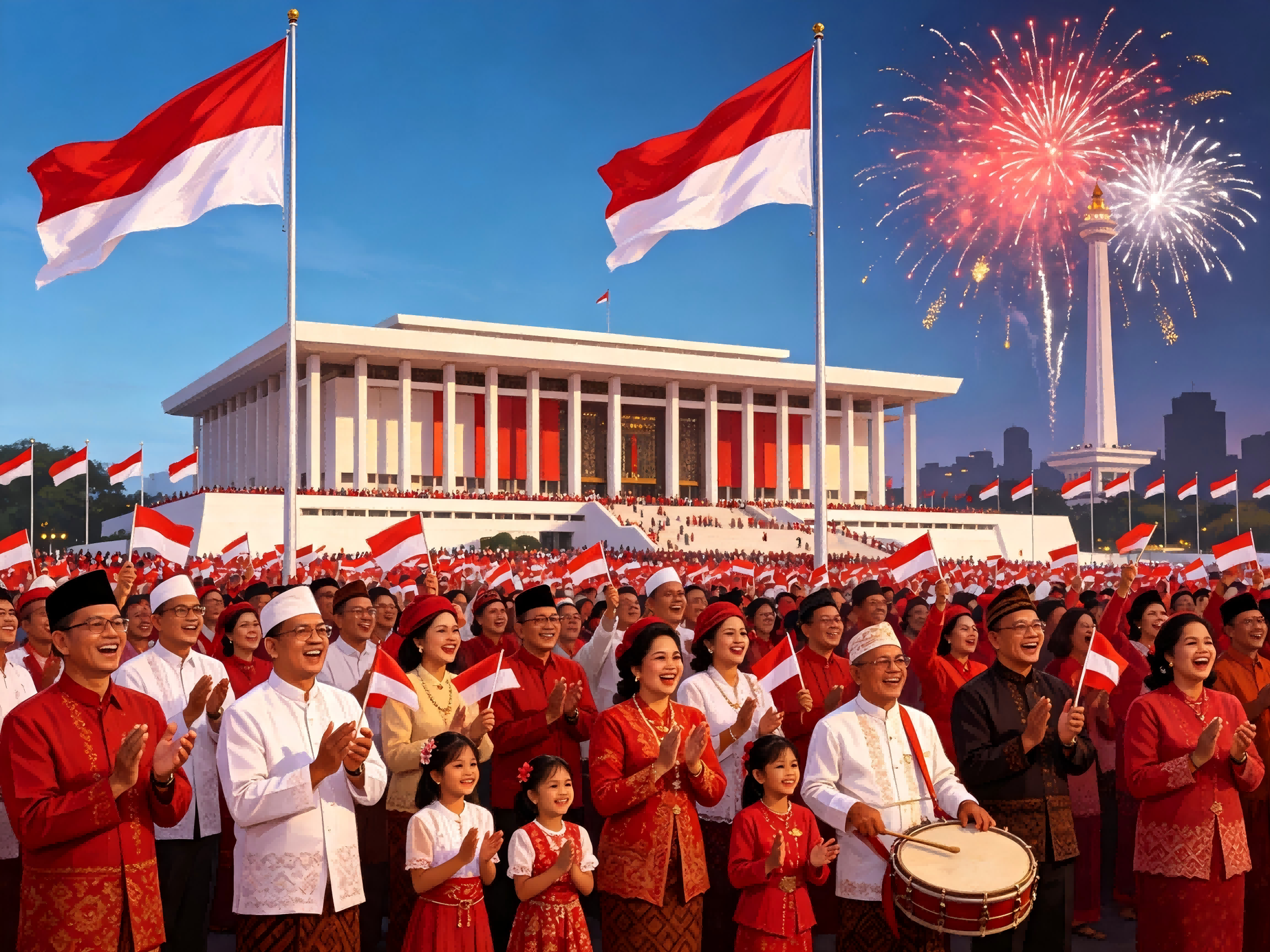
8月17日当天,印尼总统普拉博沃·苏比安托(Prabowo Subianto)将亲自主持独立宣言纪念升旗仪式和国旗降旗仪式。仪式将在雅加达独立宫(Istana Merdeka)举行。
政府面向公众开放了8,100个观礼名额,公众可通过在线注册系统抢票参与。这一机制被称为 “抢票战” (ticket war),足见民众参与热情之高。
此外,印尼国家边境管理局(BNPP)将在全国15个边境口岸同步举行升旗仪式,彰显国家在边境地区的存在感。
2. 传统民间竞技:17 Augustan 的特色项目
印尼国庆日有一系列极具特色的传统竞技活动,统称为 “17 Augustan” 。2026年国庆日,政府在雅加达Monas和Bundaran HI区域准备了丰富多彩的竞技项目:
| 竞技项目 | 特色说明 |
|---|
| 麻袋赛跑(Balap Karung) | 参赛者双腿套入麻袋跳跃前进,经典国民项目 |
| 钓饼干(Mancing Kerupuk) | 用嘴叼住悬吊的饼干,考验耐心与技巧 |
| 爬槟榔树(Panjat Pinang) | 攀爬涂满油脂的槟榔树干,团队协作的经典项目 |
| 拔河(Tarik Tambang) | 力量与团队配合的较量 |
| 面粉接力(Estafet Tepung) | 用纸盘传递面粉,笑料百出 |
| 气球舞(Joget Balon) | 绑气球跳舞的趣味项目 |
3. 地方特色传统:Taptu 火炬游行
在8月16日夜晚,印尼各地会举行 Taptu(Penetapan Waktu,时间设定)火炬游行活动。参与者手持火炬列队行进,火炬的光芒象征着先辈的奋斗精神,寓意着民族精神的火种代代相传。
不同地区的Taptu活动形式各异——有的地方以庄严仪式开场,有的地方融入地方歌舞表演,但都承载着缅怀先烈、激发爱国情怀的共同精神内核。
4. 其他特色活动
水下升旗仪式:中爪哇Umbul Ponggok水池每年举办水下升旗仪式,成为全国独一无二的国庆传统
文化嘉年华:各地举办传统服饰游行、文化表演,如来自南苏门答腊的Ribang Kemambang、巴厘岛的Kecak舞等
红色与白色列车:印尼国铁推出“Merdeka列车”,车厢内外装饰红白国旗色,乘客在旅途中参与国庆趣味游戏
三、2026年假期安排:三天连休不加调休
1. 2026年8月法定假日
根据印尼三位部长联合决定书(SKB 3 Menteri),2026年8月共有2天国家法定假日:
| 日期 | 节日名称 | 类型 |
|---|
| 8月17日(星期一) | 印尼独立日(HUT ke-81 RI) | 国家法定假日 |
| 8月25日(星期二) | 先知穆罕默德诞辰日 | 国家法定假日 |
2. 三天连休:无需请假的长周末
2026年独立日最大的亮点是:8月15日(星期六)、16日(星期日)、17日(星期一)自然衔接,形成无需请假、无需调休的三天连休。
与2025年不同——2025年独立日落在星期日,政府将8月18日(星期一)设为集体调休日;2026年独立日直接落在星期一,8月18日(星期二)不设调休,正常上班。
3. 对民众生活的直接影响
三天连休预计将带来:

四、对社会经济与民生的影响
1. 消费与零售:冰火两重天
线下商场:乐观预期
印尼购物中心管理协会(APPBI)对国庆长周末的消费拉动持乐观态度,目标交易额增长15%-20%。这一增长预期得益于两大因素叠加:
APPBI预计2026年印尼购物节总交易额将达到约38.97万亿印尼盾,客流量预计同比增长约10%。ISF 2026还重点推广本土品牌、中小微企业和印尼特色美食,旨在支撑中下阶层购买力。
然而,并非所有商家都分享到了节日的红利。
国旗与国庆装饰品商贩:收入骤降
与商场的乐观形成鲜明对比的是,街头的季节性商贩正经历销售寒冬。多位国旗商贩反映,2026年国庆前夕的销售额较去年同期下降高达60%。往年独立日前三天,商贩一天能赚到100万印尼盾,而今年连50万印尼盾都难以达到。
日惹的小商贩也表达了类似的困境——基本生活品价格上涨加重了经营负担。这一现象折射出印尼当前经济的一个现实:宏观经济指标向好,但底层民众的获得感仍然不足。
经济学者也泼了一盆冷水——长周末和折扣带来的消费增长,更多是 “提前消费” (pull-forward consumption),而非购买力的实质性恢复。当折扣结束,消费可能重回疲软。
2. 普拉博沃的国庆演讲:6%增长目标与民生挑战
在国庆日前夕(8月14日),普拉博沃总统发表了高风险的国庆演讲。他重申了2026年实现6%经济增长的目标,并强调粮食安全形势向好,8种主要粮食已实现自给。
然而,普拉博沃政府2026年也面临不小的挑战:印尼盾贬值、股市表现不佳。经济学者Kompas的评论指出,独立81年后,城市居民仍在贫困与不平等的压力下挣扎——必需品价格持续上涨,而购买力却在减弱。
五、对电商的影响:节日流量与促销机遇
1. 国庆长周末的消费窗口
三天连休为电商平台创造了天然的消费窗口。消费者拥有更多闲暇时间浏览和购物,加之印尼购物节的同步举行,电商平台有望迎来一波流量高峰。
2. #BeliLokal 运动的持续发力
印尼政府持续推动的 #BeliLokal(买国货)运动在2026年上半年交出了亮眼成绩单:
参与卖家数量:较2025年上半年增长50%
交易额(GMV) :增长14%
国庆期间,这一趋势预计将进一步强化。平台的促销活动将继续向本土产品倾斜,符合政府扶持国内产业的政策方向。
3. 对卖家的具体建议
对于在Shopee、TikTok Shop、Lazada、Tokopedia等平台运营的卖家:
提前备货:国庆前后物流效率可能下降,建议提前完成补货
预留运输周期:考虑假期对配送时效的影响
合理规划促销:长周末是流量高峰,但需算清折扣与利润的账
关注本土产品政策:#BeliLokal 趋势下,本土认证产品享有更多政策倾斜
六、对进出口贸易和物流清关的影响
1. 清关效率:假期模式下的放缓
8月17日前后,印尼部分政府部门、海关及相关行政机构进入假期模式,业务办理效率可能受到影响。
历史经验表明,印尼长假期间海关、港口、物流配送等环节基本停摆,本就偏慢的物流时效进一步拉长,货物积压风险显著上升。
2. 港口作业与末端派送
港口作业人员短缺:假期期间港口人手不足,装卸效率下降
进出口文件审批停滞:各类清关文件审批暂停,延长货物滞留时间
末端派送周期延长:预计额外增加1至2周,对跨境备货、补货计划造成冲击
3. 实操建议
对于出口印尼的企业和跨境电商卖家:
| 建议事项 | 具体操作 |
|---|
| 提前订舱 | 避开假期集中到港,降低等待清关时间 |
| 提前备货 | 提前完成货物准备和报关资料整理 |
| 选择稳定服务商 | 选择拥有本地配送能力的双清专线服务商 |
| 海外仓布局 | 提前将货物备至印尼海外仓,降低末端派送压力 |
| 合规先行 | 确保清关资料完整,避免因资料不全被扣货 |
七、结语
2026年8月17日,印尼迎来独立81周年。从1945年苏加诺在雅加达住宅前宣读独立宣言的那一刻起,这个“千岛之国”走过了波澜壮阔的建国之路。
今天的印尼国庆日,早已超越了单纯的纪念仪式——它是全国民众的狂欢节(麻袋赛跑、钓饼干、爬槟榔树),是传统文化的展示窗(Taptu火炬游行、水下升旗、文化嘉年华),更是经济社会运行的晴雨表。
对于关注印尼市场的中国企业和跨境电商卖家而言,国庆长假是一面双面镜:一面是消费提振的机遇——长周末、购物节、平台促销三重叠加;另一面是物流清关的挑战——效率放缓、周期延长、积压风险上升。
提前规划、合规经营、本土化深耕,依然是穿越印尼市场周期的不二法则。
关注汇百方国际微信公众号,获取更多资讯和印尼物流解决方案
Indonesia's 81st Independence Day: History, Traditions, Holiday Schedule, and Impacts on Economy, E‑Commerce, Trade & Logistics
📌 Key Takeaways
On 17 August 2026, Indonesia celebrates its 81st Independence Day. This year's theme is "Indonesian Sovereignty, Justice, and Prosperity." Festivities run from the national prayer gathering on 1 August, peak with the flag‑raising ceremony at Merdeka Palace on 17 August, and conclude with drone shows and video mapping on the evening of 17 August – a celebration that spans the entire month. This article provides a comprehensive overview of Indonesia's Independence Day – from the historic moment when Sukarno read the Proclamation of Independence in 1945, to traditional cultural events across the archipelago, and the cascading impacts of the long holiday on e‑commerce, import/export trade, and logistics clearance – offering a panoramic reference for readers interested in the Indonesian market.
I. Historical Background: The Proclamation of 17 August 1945
1. The Birth of the Proclamation
On 17 August 1945, Sukarno (Soekarno) and Mohammad Hatta read the Proclamation of Independence (Proklamasi Kemerdekaan Indonesia) in front of Sukarno's residence in Jakarta, formally declaring the establishment of the Republic of Indonesia.
The proclamation was not a sudden event. As early as March 1945, during the Japanese occupation of the Dutch East Indies, the occupying administration invited local independence movement leaders to join the Investigating Committee for Preparatory Work for Independence (BPUPK), laying the legal groundwork for independence. On 1 June 1945, Sukarno delivered his famous "Pancasila" (Five Principles) speech – nationalism, internationalism, democracy, social justice, and belief in God. Just over two months later, following Japan's surrender, Indonesia's independence leaders seized the historic opportunity and proclaimed independence.
Immediately after the proclamation, Indonesia witnessed a nationwide "August Revolution". On 18 August, the Preparatory Committee for Indonesian Independence (PPKI) approved the Constitution of the Republic of Indonesia and elected Sukarno and Hatta as President and Vice‑President. Over the following years, Indonesia fought a bitter struggle against Dutch colonial forces until the Netherlands finally recognised 17 August 1945 as Indonesia's official Independence Day.
2. 2026: The 81st Anniversary
2026 marks Indonesia's 81st year of independence. The official theme for this year's celebrations is "Indonesia Berdaulat, Adil, dan Makmur" (Sovereign, Just, and Prosperous Indonesia). This theme not only honours the spirit of independence but also reflects the current government's policy directions – strengthening national sovereignty, promoting equitable development, and enhancing the welfare of all citizens.
II. Traditions and Customs: From Solemn Ceremonies to Nationwide Festivities
Indonesia's Independence Day celebrations exhibit a dual character: solemn and official on one hand, lively and popular on the other.
1. Official Ceremonies: The Solemn Moment at Merdeka Palace
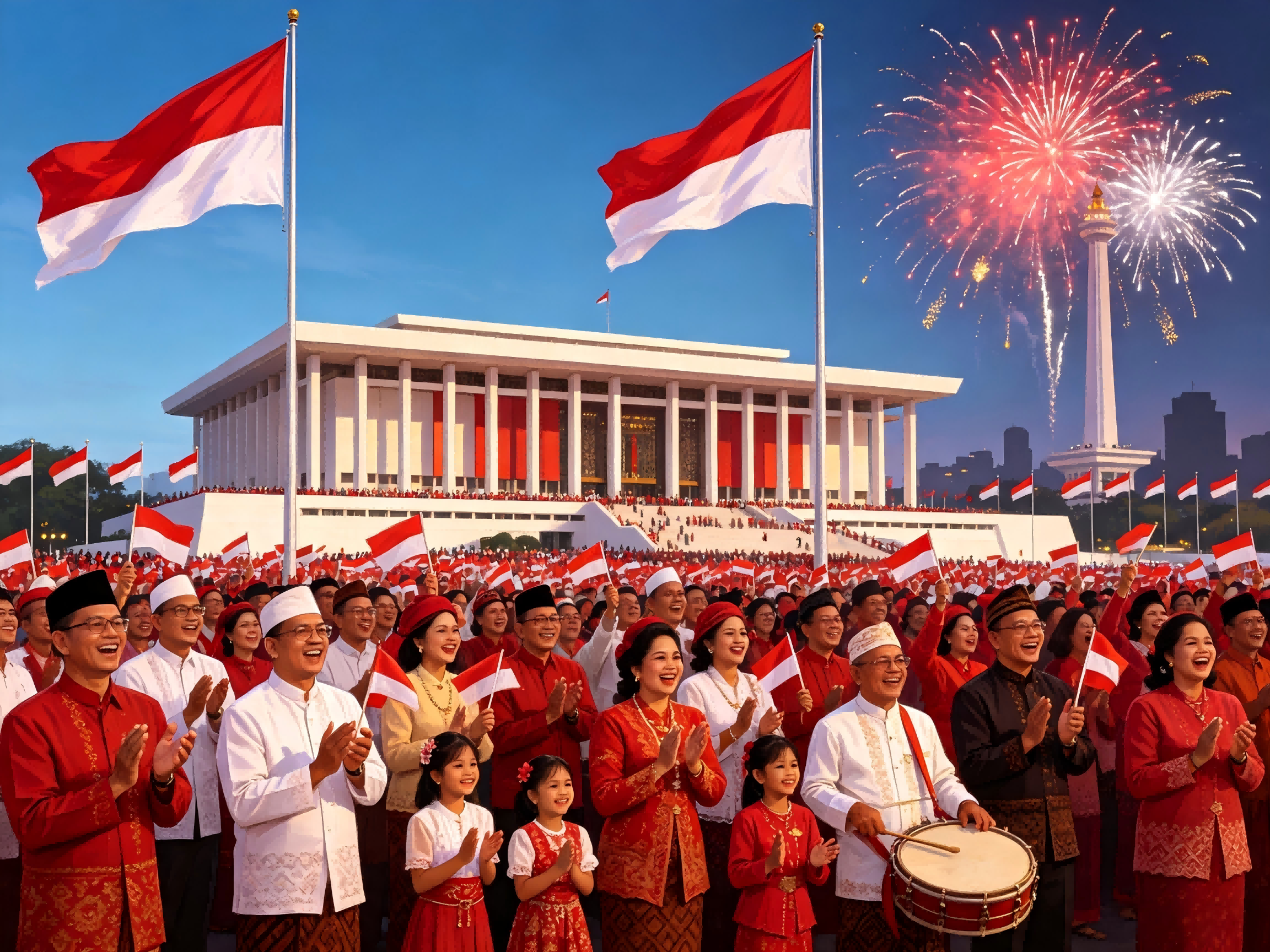
On 17 August, President Prabowo Subianto will personally preside over the Independence Proclamation Commemorative Flag‑Raising Ceremony and the Flag‑Lowering Ceremony. Both ceremonies will be held at Merdeka Palace (Istana Merdeka) in Jakarta.
The government has opened 8,100 public viewing slots, which can be booked through an online registration system. This mechanism, often dubbed the "ticket war" (perang tiket), reflects the high level of public enthusiasm.
In addition, the National Border Management Agency (BNPP) will hold simultaneous flag‑raising ceremonies at 15 border posts across the country, underscoring the state's presence in border regions.
2. Traditional Folk Games: The "17 Augustan" Competitions
Independence Day in Indonesia is famous for its unique traditional games, collectively known as "17 Augustan". For the 2026 celebrations, the government has prepared a rich variety of competitions at Monas and Bundaran HI in Jakarta:
| Game | Description |
|---|
| Sack Race (Balap Karung) | Participants jump forward with their legs inside a sack – a classic national favourite. |
| Cracker Eating (Mancing Kerupuk) | Using only the mouth to catch crackers hanging from a string – tests patience and skill. |
| Greased Pole Climbing (Panjat Pinang) | Climbing a pinang tree trunk coated in grease – a team‑work classic. |
| Tug‑of‑War (Tarik Tambang) | A test of strength and coordination. |
| Flour Relay (Estafet Tepung) | Passing flour on paper plates – full of laughs. |
| Balloon Dance (Joget Balon) | Dancing with balloons tied to the body – a fun filler activity. |
3. Regional Traditions: Taptu Torch Parades
On the night of 16 August, torch parades known as Taptu (Penetapan Waktu – "Setting the Time") are held across Indonesia. Participants march in procession carrying torches; the flame of the torch symbolises the fighting spirit of the forefathers, passing the torch of national spirit from generation to generation.
Different regions put their own spin on Taptu – some open with solemn ceremonies, others incorporate local songs and dances – but all share the common core of honouring the heroes and inspiring patriotic sentiment.
4. Other Distinctive Activities
Underwater Flag Raising: At Umbul Ponggok pool in Central Java, an annual underwater flag‑raising ceremony is held – a truly unique tradition.
Cultural Carnivals: Traditional costume parades and cultural performances are held nationwide, such as the Ribang Kemambang from South Sumatra, Kecak dance from Bali, and many more.
Red‑and‑White Trains: State railway company KAI operates "Merdeka trains" with carriages decorated in red and white, where passengers can join Independence‑themed games during their journey.
III. 2026 Holiday Schedule: A Three‑Day Long Weekend Without "Make‑Up" Days
1. National Holidays in August 2026
According to the Joint Ministerial Decree (SKB 3 Menteri), August 2026 has two national holidays:
| Date | Holiday Name | Type |
|---|
| 17 August (Monday) | 81st Independence Day | National Holiday |
| 25 August (Tuesday) | Prophet Muhammad's Birthday | National Holiday |
2. Three‑Day Long Weekend: No Extra Leave Needed
The biggest highlight of the 2026 Independence Day holiday is: 15 August (Saturday), 16 August (Sunday), and 17 August (Monday) naturally form a three‑day long weekend – no extra leave, no shifting of workdays.
This contrasts with 2025, when Independence Day fell on a Sunday, and the government designated Monday 18 August as a collective leave day. In 2026, since 17 August is a Monday, Tuesday 18 August is a normal working day (no collective leave) .
3. Direct Impact on People's Lives
The three‑day long weekend is expected to bring:
Travel peak – tourist attractions, highways, airports, and seaports will see increased traffic
Family gatherings – homecoming trips and family dinners will be the main activities
Leisure consumption – malls, restaurants, and entertainment venues will experience visitor surges

IV. Impact on the Economy and People's Livelihoods
1. Consumption and Retail: A Tale of Two Worlds
Brick‑and‑mortar malls: Optimistic
The Indonesian Shopping Centre Management Association (APPBI) is optimistic about the consumption boost during the long weekend, targeting a 15%‑20% transaction growth. This optimism is driven by two overlapping factors:
The Indonesia Shopping Festival 2026 runs from 7 to 23 August, perfectly coinciding with the long weekend.
The festival offers massive discounts, promotions, cultural and entertainment programmes, and consumers have chances to win prizes including electric vehicles.
APPBI projects that the total transaction value of ISF 2026 will reach approximately IDR 38.97 trillion, with foot traffic expected to increase by about 10% year‑on‑year. ISF 2026 also focuses on promoting local brands, MSMEs, and Indonesian specialty cuisine, with the aim of supporting the purchasing power of the lower‑middle class.
However, not all businesses are sharing in the festive bounty.
Flag and Independence decoration street vendors: Sales slump
In stark contrast to the malls, seasonal street vendors are experiencing a sales winter. Many flag vendors have reported that sales ahead of the 2026 Independence Day dropped by as much as 60% compared to the same period last year. In previous years, vendors could earn up to IDR 1 million per day in the three days before Independence Day; this year, even IDR 500,000 is hard to achieve.
Small traders in Yogyakarta have expressed similar difficulties – rising prices of basic necessities have added to their operational burdens. This reflects a reality of Indonesia's current economy: macro‑economic indicators are positive, but the sense of gain among lower‑income groups remains weak.
Economists have also poured some cold water – the consumption boost brought by the long weekend and discounts is largely "pull‑forward consumption" rather than a genuine recovery in purchasing power. When the discounts end, consumption may return to sluggishness.
2. Prabowo's Independence Day Speech: 6% Growth Target and Livelihood Challenges
On the eve of Independence Day (14 August), President Prabowo delivered a high‑stakes national address. He reaffirmed the target of achieving 6% economic growth in 2026 and emphasised that the food security situation is improving, with 8 staple commodities now self‑sufficient.
However, the Prabowo government also faces considerable challenges in 2026: the rupiah has depreciated, and the stock market has underperformed. As Kompas commentators have pointed out, 81 years after independence, urban residents are still struggling under the weight of poverty and inequality – the prices of essential goods continue to rise, while purchasing power weakens.
V. Impact on E‑Commerce: Holiday Traffic and Promotional Opportunities
1. The Consumption Window of the Long Weekend
The three‑day weekend creates a natural consumption window for e‑commerce platforms. With more leisure time to browse and shop, and with the Indonesia Shopping Festival running concurrently, e‑commerce platforms can expect a traffic surge.
2. #BeliLokal Movement Continues to Gain Momentum
The government's ongoing #BeliLokal (Buy Local) campaign delivered impressive results in the first half of 2026:
This trend is expected to strengthen further during the Independence Day period. Platform promotions will continue to favour local products, in line with the government's policy of supporting domestic industry.
3. Practical Advice for Sellers
For sellers operating on Shopee, TikTok Shop, Lazada, Tokopedia and other platforms:
Stock up early – logistics efficiency may decline around Independence Day; complete replenishment ahead of time
Factor in longer delivery lead times – account for the impact of the holiday on shipping
Plan promotions wisely – the long weekend brings traffic, but be sure to calculate the real cost of discounts against profits
Stay attuned to local‑product policies – under #BeliLokal, locally certified products enjoy more policy support
VI. Impact on Import‑Export Trade and Logistics/Customs Clearance
1. Customs Clearance: Slower During Holiday Mode
Around 17 August, some government departments, customs offices, and related administrative bodies enter holiday mode, which may affect the processing of official business.
Historical experience shows that during Indonesian long holidays, customs, ports, delivery services, etc., largely come to a standstill – the already slow logistics cycle gets even longer, and the risk of cargo accumulation rises significantly.
2. Port Operations and Last‑Mile Delivery
Shortage of port staff – reduced manpower during holidays lowers loading/unloading efficiency
Import/export document approvals stall – clearance document processing is suspended, prolonging cargo dwell time
Last‑mile delivery cycles extend – an additional 1 to 2 weeks should be anticipated, affecting cross‑border stocking and replenishment plans
3. Practical Advice
For companies exporting to Indonesia and cross‑border e‑commerce sellers:
| Recommendation | Action |
|---|
| Book cargo slots early | Avoid peak arrival during the holiday to reduce customs waiting time |
| Prepare goods in advance | Complete cargo readiness and documentation well ahead |
| Choose reliable service providers | Engage end‑to‑end logistics partners with local delivery capabilities |
| Deploy overseas warehousing | Move goods into Indonesian overseas warehouses early to ease last‑mile pressure |
| Ensure full compliance | Have complete clearance documents to avoid detention due to missing paperwork |
VII. Conclusion
On 17 August 2026, Indonesia marks its 81st year of independence. From the moment Sukarno read the Proclamation in front of his Jakarta residence in 1945, the "Thousand Islands" nation has traversed a momentous journey of nation‑building.
Today, Indonesia's Independence Day is far more than a mere commemorative ritual – it is a nationwide carnival (sack races, cracker eating, greased‑pole climbing), a showcase of cultural traditions (Taptu torch parades, underwater flag‑raising, cultural carnivals), and a barometer of economic and social performance.
For Chinese companies and cross‑border e‑commerce sellers eyeing the Indonesian market, the Independence Day long weekend is a double‑edged mirror: on one side, opportunities for consumption uplift – the long weekend, the shopping festival, and platform promotions all align; on the other side, challenges in logistics and customs – slowed efficiency, extended cycles, and rising risk of cargo backlogs.
Planning ahead, operating with compliance, and deepening localisation remain the golden rules for navigating Indonesia's market cycles.