2026印尼电商促销日大全|每月双日节+Harbolnas+斋月大促|平台成本与卖家机会深度解析
📑 内容速览
2026年促销全景图:每月都有“节日”
促销为何扎堆?三大底层逻辑拆解
印尼人怎么买?网购习惯与消费能力画像
平台角色揭秘:做了什么?花了多少钱?
卖家行动指南:如何在大促中真正赚钱?
一、2026年印尼电商促销全景图:每月都有“节日”
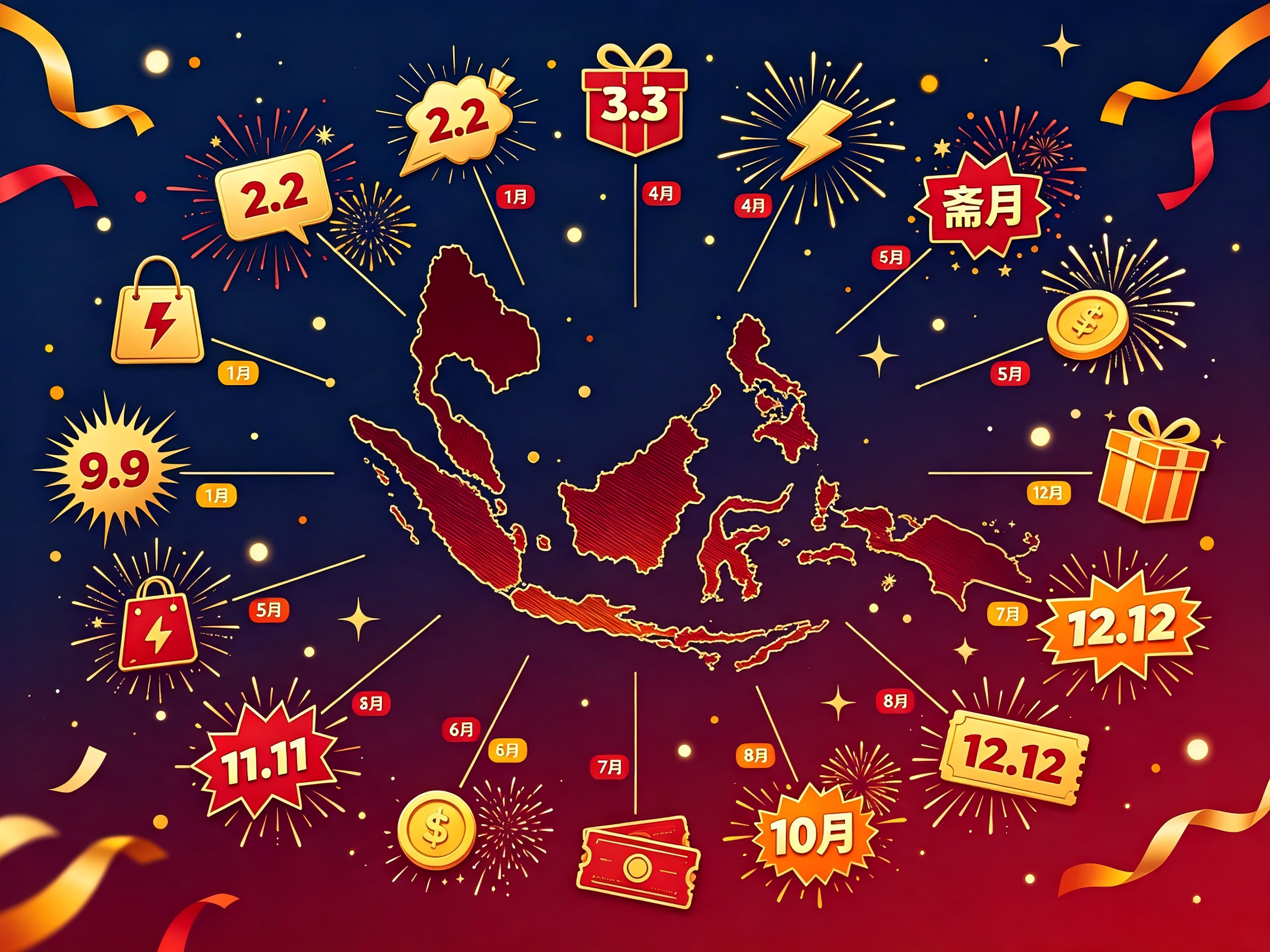
印尼电商市场的一个显著特征是促销密度极高——几乎每个月都有至少一个大型促销节点。
TikTok Shop发布的《2026年东南亚大促日历》涵盖印尼、泰国、越南等六大核心市场的142个重点促销日,包含11个平台级S级大促和23个跨境专属促销时段。TikTok将印尼定位为唯一超大型市场,全年设置4个“超级品牌日”。
📆 每月双日节大促——贯穿全年的“固定节目”
“双日节”是印尼电商平台最基础的促销节奏。从年初到年末,每月与日期数字相同的日子几乎都是促销日:
| 月份 | 双日节大促 | 叠加节日/特殊节点 |
|---|
| 1月 | — | 元旦、新年大促 |
| 2月 | 2.2 | 情人节(2.14)、春节、斋月(2月中旬-3月中旬) |
| 3月 | 3.3 | 斋月持续进行 |
| 4月 | 4.4 | — |
| 5月 | 5.5 | 母亲节(5.10) |
| 6月 | 6.6 | 夏季大促开启、父亲节(6.21) |
| 7月 | 7.7 | — |
| 8月 | 8.8 | 印尼独立日(8.17) 、返校季 |
| 9月 | 9.9 | 下半年Mega Sales开启(全年力度最大促销季启动) |
| 10月 | 10.10 | 万圣节(10.31) |
| 11月 | 11.11 | 黑色星期五(11.27) 、网络星期一(11.30) |
| 12月 | 12.12 | 圣诞节(12.25) 、Harbolnas全国网购节 |
💡 重点提示:9.9大促被平台定位为下半年重点大促的开启节点,是一年中力度最大的促销活动之一。而11.11和12.12则是全年促销的顶峰。
🌙 斋月大促——年度最大流量洪峰
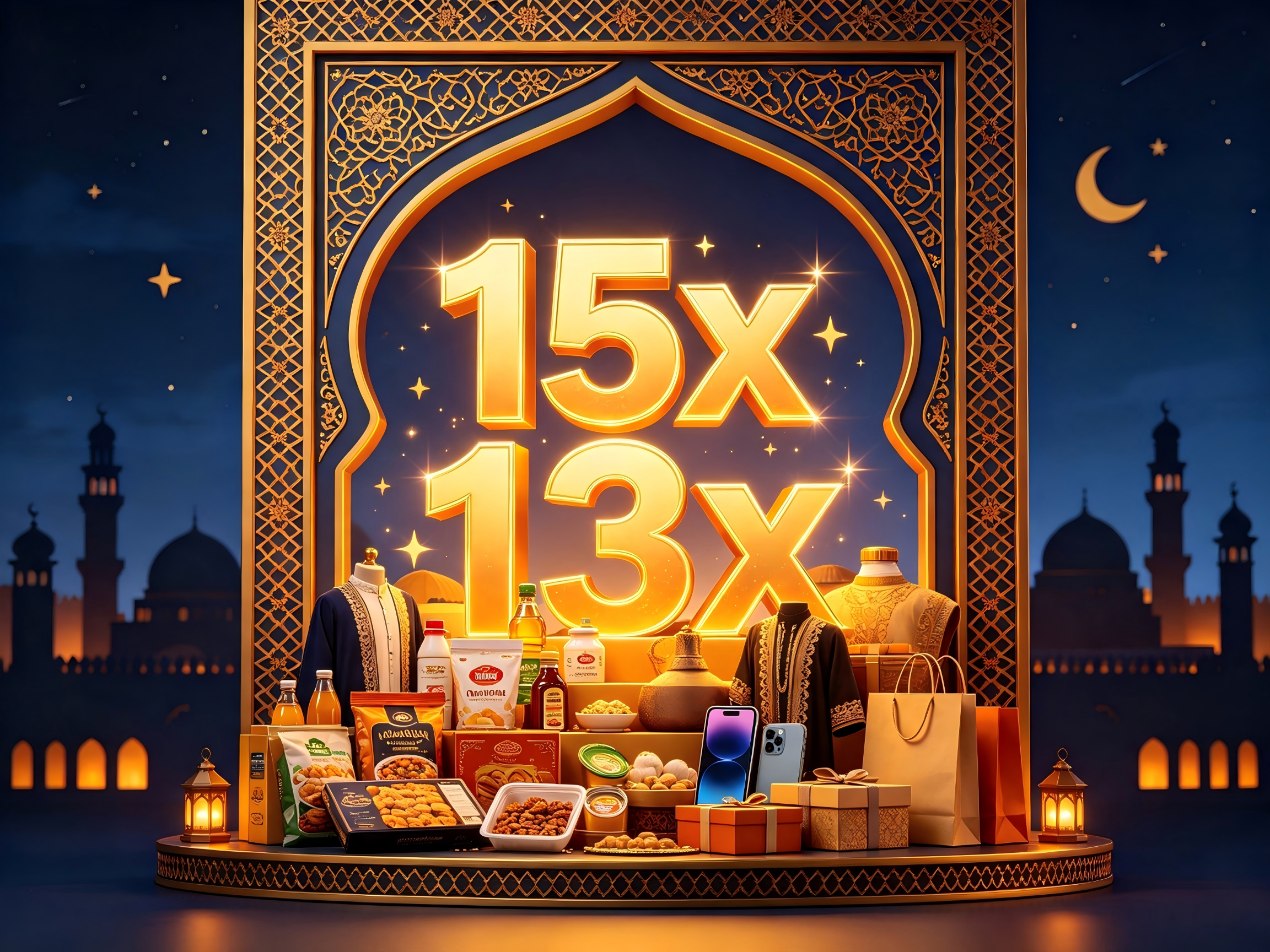
斋月(Ramadan)是印尼电商年度最重要的促销季,没有之一。2026年斋月从2月18日开始,3月19-20日达到峰值。
各大平台的表现数据令人震撼:
🟠 Shopee“大斋月促销”期间,食品饮料品类销量较日常暴涨超过13倍;“开斋节服装”关键词搜索量增长至3倍
🔴 TikTok Shop与Tokopedia联合推出的“Ramadan Extra Exciting 2026”活动,封斋前用餐时段交易量同比激增15倍;Tokopedia限时促销带动浏览量最高提升23倍
🟣 Lazada印尼凭借3.3大促到THR购物季的一系列活动,销售额增长3.5倍
斋月期间,68%的用户受内容驱动购物,斋月首周短视频发布近1300万条。
🇮🇩 Harbolnas——国家级的“双十一”
Harbolnas(Hari Belanja Online Nasional,全国网购日)是印尼政府主导的年度最大线上购物节。
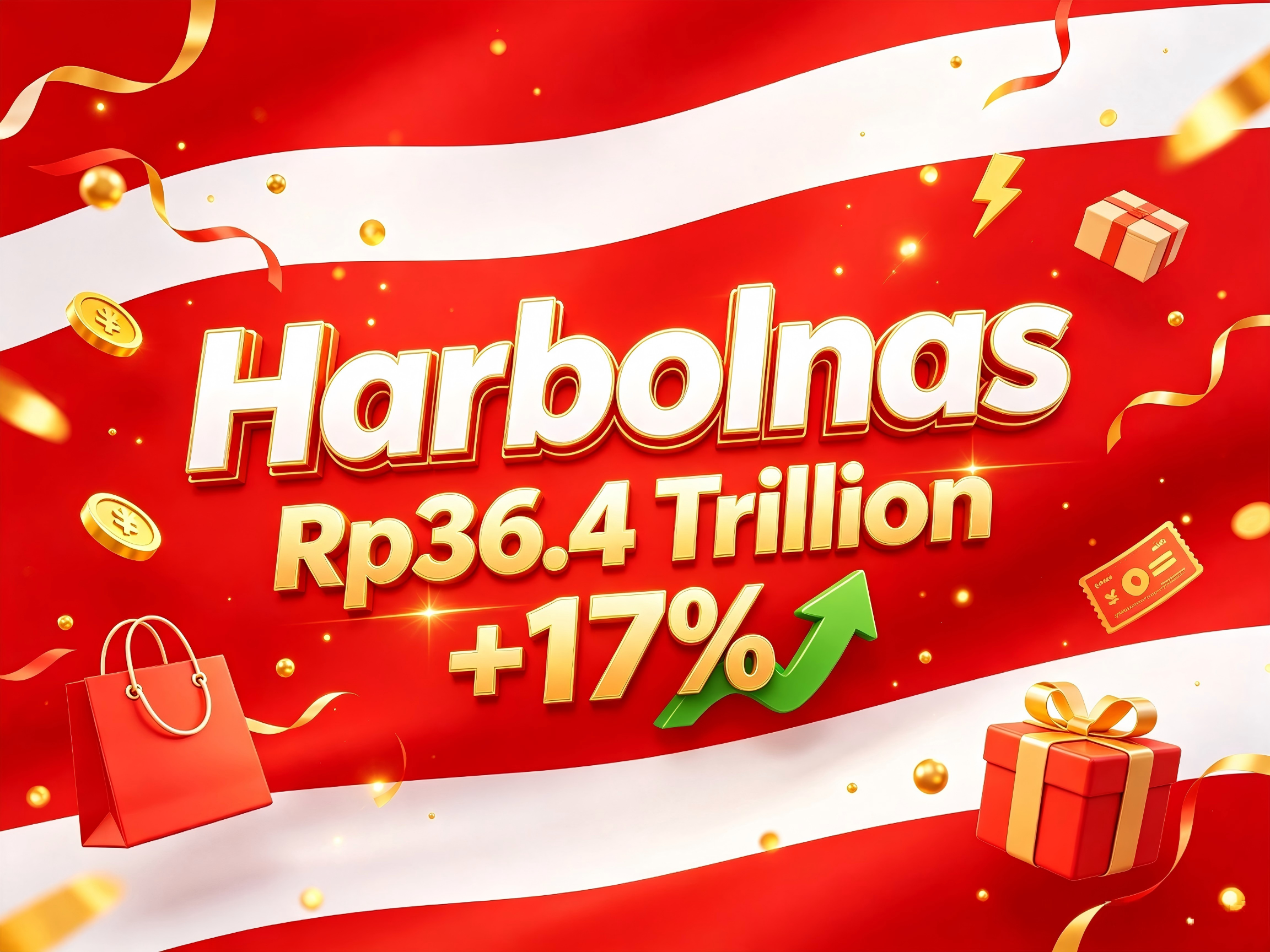
2025年12月10日至16日举办的Harbolnas创下36.4万亿印尼盾(约21.7亿美元) 的交易额,远超政府33-34万亿盾的目标,较2024年增长17%。其中,本地产品贡献16.6万亿印尼盾,占比45.6%。
Harbolnas与BINA(在印尼购物)、EPIC Sale共同构成印尼国家消费计划。2025年12月至2026年1月,三大计划合计实现交易额122.28万亿印尼盾,超过110万亿印尼盾的目标。
二、促销扎堆出现:三大底层逻辑拆解
🏛️ 逻辑一:消费驱动型增长战略
印尼政府将刺激内需作为经济增长的核心引擎。2025年印尼电商GMV约达710亿美元,预计2028年将增长至868.1亿美元,年复合增长率10.4%。
政府通过Harbolnas、BINA、EPIC Sale等国家级购物计划,直接推动消费。经济协调部明确表示,这些计划旨在“维持购买力、扩大国内产品市场准入、加强国家零售和数字贸易生态系统”。
艾尔朗加·哈尔塔托在2025年底表示,国家消费计划的目标是到2026年1月4日实现110万亿印尼盾的交易额——这一目标最终被超额完成。
📋 逻辑二:扶持本土产业与中小微企业
促销不仅是商业行为,更承载了政策意图:
✅ 本土产品优先:Harbolnas明确要求本土产品贡献占比。2025年Harbolnas中本土产品占比达45.6%
✅ 中小微企业扶持:2026年6月17日生效的中小微企业部第3号条例强制要求平台对经认证的本土中小微卖家减免至少50%的服务费
✅ 规范无序竞争:2026年第19号贸易部长条例核心打击“低价倾销”和“不合理补贴”等价格操纵行为,同时明确11.11、12.12大促及运费补贴不会叫停
🚀 逻辑三:平台争夺流量与市场份额
印尼电商市场竞争激烈。APJII调查显示,2026年47.5% 的印尼网民频繁访问Shopee,33.4% 频繁访问TikTok Shop,Tokopedia占11.2%,Lazada占6.2%。
高频促销是平台获取新用户、提升用户粘性、抢占市场份额的核心手段。
TikTok Shop披露的“3+3+3”促销模型(3天预热+3天正式大促+3天直播长尾消化),本质上是将促销节奏产品化、标准化,以最大化流量转化效率。

三、印尼人怎么买?网购习惯与消费能力画像
📊 网购渗透率:几乎全民覆盖
📈 网购频率:每月2-3次是主流
| 数据来源 | 核心发现 |
|---|
| 行业综合调查 | 62% 的印尼人每月网购2-3次 |
| APJII 2026 | 33.5% 几个月网购几次,30.1% 每月网购几次 |
| 中产阶级 | 42.4% 每月访问电商超过4次 |
| 综合平均 | 印尼消费者每月网购约8.2次 |
🔥 近四成民众每周至少网购一次,10%每天网购。
💰 消费能力:月度支出集中在10万-50万印尼盾
🛍️ 热门品类:服饰称王
APJII 2026年调查显示,印尼消费者网购最多的产品类别:
| 排名 | 品类 | 购买比例 |
|---|
| 1️⃣ | 服装与配饰 | 39.6% |
| 2️⃣ | 美妆与个人护理 | 18.6% |
| 3️⃣ | 食品与饮料 | 12.7% |
| 4️⃣ | 家用电器 | 10% |
| 5️⃣ | 电子与数码产品 | 7.4% |
| 6️⃣ | 汽车配件 | 6.8% |
🎯 消费驱动因素
印尼消费者网购的主要驱动因素包括低价商品、免运费政策及平台便捷性。
值得注意的是,83% 的印尼消费者参与过直播购物,直播电商转化率是传统电商的3倍,已占整体电商GMV超20%。
四、平台角色揭秘:做了什么?花了多少钱?
🎭 平台扮演什么角色?
在印尼电商大促中,平台承担了四重角色:
| 角色 | 具体职责 |
|---|
| 🏢 组织者 | 策划促销节奏、设定活动规则、协调品牌与卖家参与 |
| 💰 补贴方 | 投入巨额资金进行运费补贴、优惠券发放、广告扶持 |
| 📡 流量分配者 | 通过算法和推荐位决定哪些商品、哪些卖家能获得大促流量 |
| 📝 规则制定者 | 设定促销门槛、价格区间、补偿机制 |
🛠️ 平台做了哪些促销动作?
1️⃣ 运费补贴
运费补贴是印尼电商平台最核心的促销手段之一。Shopee的XTRA免运计划允许卖家以更低门槛向买家发放折扣券。2026年第19号新规明确不会叫停运费补贴。
2️⃣ 巨额折扣与优惠券
3️⃣ 内容与直播电商
4️⃣ “3+3+3”促销模型
TikTok Shop推出标准化的促销节奏:3天预热期通过短视频种草蓄水,3天正式大促实现流量转化,3天后续通过直播专场消化长尾流量。
5️⃣ 物流保障
针对11.11、12.12等关键节点,平台推出 “黄金48小时”物流保障计划,承诺新加坡、吉隆坡等重点城市隔日达。

💸 平台承担了哪些成本?
平台的成本主要来自四个方面:
| 成本类型 | 具体说明 |
|---|
| 🚚 运费补贴 | 平台最大的单项成本支出。Shopee XTRA促销计划服务费为4.5%,单件商品最高6万印尼盾 |
| 📢 流量采买与广告投放 | 站外渠道(社交媒体、搜索引擎、传统媒体)大促预热和引流;TikTok Shop在雅加达建立首个区域直播基地,配备200间智能直播间 |
| 🖥️ 技术基建投入 | Tokopedia限时促销曾带动浏览量最高提升23倍,平台需持续投入服务器扩容、系统优化 |
| 🤝 卖家扶持成本 | 新入驻卖家获价值100万印尼盾的店铺代金券和7.5万印尼盾广告余额 |
⚠️ 重要提示:2026年5月,平台费用迎来集中上调,TikTok Shop、Tokopedia、Shopee三大平台同步实施新规,卖家佣金、物流成本大幅上涨,标志着印尼电商市场正式告别补贴红利期。
📋 平台的责任边界
随着促销规模的扩大,印尼政府正在加强对平台责任的规范:
✅ 费用透明:平台须向卖家明示服务费用结构、排名逻辑、促销规则,杜绝隐性扣费
✅ 公平竞争:平台不能通过折扣和促销强制捆绑特定支付或物流服务
✅ 提前告知:平台若主动发起大促活动,须提前15个工作日向卖家书面说明价格浮动区间及补偿机制
✅ 本地产品优先:平台需优先展示及扶持印尼本土中小微企业与国产商品
五、卖家行动指南:如何在大促中真正赚钱?
🗓️ 建议一:提前规划,锚定关键节点
2026年印尼电商促销已形成固定节奏。卖家应提前3-6个月规划:
| 节点 | 时间 | 备货重点 |
|---|
| 🌙 斋月 | 2-3月 | 食品饮料、穆斯林时尚、家居用品——全年最大流量池 |
| 🚀 9.9大促 | 9月 | 下半年Mega Sales启动——备货黄金窗口 |
| 🏆 11.11-12.12-Harbolnas | 11-12月 | 年度终极促销季——全年最高GMV |
📱 建议二:内容先行,直播为王
83% 的印尼消费者参与过直播购物,直播转化率是传统电商的3倍。大促期间:
📹 提前3天预热期通过短视频种草蓄水
🔴 大促正式期通过直播专场实现集中转化
🔄 大促后续期继续通过直播消化长尾流量
🇮🇩 建议三:本土化是底线
印尼政策持续向本土产品倾斜。第19号新规核心是扶持本土产品与中小微商户,跨境卖家应避开“亏本赚吆喝”的极端低价策略。合规促销、合规定价是长期生存的前提。
🧮 建议四:算清成本账
大促期间的折扣、运费补贴、广告投放——每一项都在侵蚀利润。2026年5月起平台费用集中上调。卖家应在参与大促前精确核算边际成本,避免“卖得越多亏得越多”。
📦 建议五:物流前置,海外仓布局
大促期间物流压力激增。平台推出“黄金48小时”物流保障计划,但卖家仍需提前备货至海外仓,确保发货时效。

六、结语
印尼电商促销日已经从“偶尔的狂欢”演变为 “全年无休的常态” 。每月双日节、斋月超级大促、Harbolnas国家购物节——三重促销节奏层层叠加,构成了全球电商市场中最密集的促销日历之一。
💡 促销密集的背后,是政府刺激消费的政策意图、平台争夺份额的商业逻辑、以及印尼消费者日益增长的网购需求三者共同作用的结果。
对于卖家而言,理解这个“促销机器”的运转逻辑——谁在推动、谁在买单、谁在受益——比盲目跟风促销更重要。
2026年,合规经营、内容驱动、本土化深耕,才是穿越印尼电商促销迷雾的通行证。
更多印尼咨询 可以关注汇百方公众号 业务顾问 苏先生 15360670369
📑 Table of Contents
2026 Promo Landscape: A Festival Every Month
Why So Many Promos? Three Underlying Drivers
How Do Indonesians Shop? Habits, Frequency & Spending Power
Platform Role Revealed: What Do They Do and How Much Does It Cost?
Seller Action Guide: How to Actually Profit from Mega‑Sales
Conclusion
I. 2026 Indonesia E‑Commerce Promo Landscape: A Festival Every Month
One defining feature of Indonesia’s e‑commerce market is extremely high promotional density – almost every month features at least one major sales event.
TikTok Shop’s 2026 Southeast Asia Mega‑Sale Calendar covers 142 key promotional days across six core markets (Indonesia, Thailand, Vietnam, etc.), including 11 platform‑level S‑tier mega‑sales and 23 cross‑border exclusive promo windows. TikTok positions Indonesia as its only “ultra‑large” market, with 4 “Super Brand Days” scheduled throughout the year.
📆 Monthly Double‑Digit Sales – The Year‑Round “Regular Show”
“Double‑digit days” are the bread‑and‑butter of Indonesia’s e‑commerce promotion rhythm. From January to December, the day that matches the month number is almost always a sales day:
| Month | Double‑Digit Promo | Overlapping Events / Special Occasions |
|---|
| Jan | — | New Year, New Year sales |
| Feb | 2.2 | Valentine’s Day (2.14), Chinese New Year, Ramadan (mid‑Feb to mid‑Mar) |
| Mar | 3.3 | Ramadan continues |
| Apr | 4.4 | — |
| May | 5.5 | Mother’s Day (5.10) |
| Jun | 6.6 | Summer sales kick‑off, Father’s Day (6.21) |
| Jul | 7.7 | — |
| Aug | 8.8 | Indonesian Independence Day (8.17) , back‑to‑school |
| Sep | 9.9 | Launch of H2 Mega‑Sales (biggest promo season of the year) |
| Oct | 10.10 | Halloween (10.31) |
| Nov | 11.11 | Black Friday (11.27) , Cyber Monday (11.30) |
| Dec | 12.12 | Christmas (12.25) , Harbolnas National Shopping Day |
💡 Key Takeaway: The 9.9 Mega‑Sale is positioned by platforms as the starting gun for H2’s biggest promotional push – one of the year’s heaviest discount events. 11.11 and 12.12 then form the pinnacle of the entire annual calendar.
🌙 Ramadan Mega‑Sale – The Year’s Largest Traffic Tsunami
Ramadan is the single most important e‑commerce season in Indonesia – bar none. In 2026, Ramadan runs from 18 February and peaks on 19‑20 March.
Platform performance numbers are staggering:
🟠 Shopee’s “Grand Ramadan Sale” saw food & beverage sales surge over 13x compared to normal days; searches for “Eid clothing” grew 3‑fold.
🔴 TikTok Shop & Tokopedia jointly ran “Ramadan Extra Exciting 2026” – transaction volume during pre‑fast meal times jumped 15x year‑on‑year; Tokopedia’s flash deals boosted page views by up to 23x.
🟣 Lazada Indonesia, through its 3.3 Mega‑Sale through to the THR shopping season, achieved 3.5x sales growth.
During Ramadan, 68% of users are driven by content – in the first week alone, nearly 13 million short videos were published.
🇮🇩 Harbolnas – The Nation’s Own “Singles’ Day”
Harbolnas (Hari Belanja Online Nasional – National Online Shopping Day) is Indonesia’s largest government‑led online shopping festival.
The 2025 Harbolnas, held from 10‑16 December, generated IDR 36.4 trillion (≈ USD 2.17 billion) in transaction value, exceeding the government’s target of IDR 33‑34 trillion and growing 17% year‑on‑year. Local products accounted for IDR 16.6 trillion, or 45.6% of the total.
Harbolnas, together with BINA (Belanja di Indonesia – Shop in Indonesia) and the EPIC Sale, forms the national consumption programme. From December 2025 to January 2026, the three initiatives combined achieved IDR 122.28 trillion in transactions, surpassing the IDR 110 trillion target.
II. Why So Many Promos? Three Underlying Drivers
🏛️ Driver 1: Consumption‑Led Growth Strategy
The Indonesian government uses domestic consumption as a core engine for economic growth. In 2025, Indonesia’s e‑commerce GMV reached approximately USD 71 billion, and is projected to grow to USD 86.81 billion by 2028, with a 10.4% CAGR.
Through national programmes like Harbolnas, BINA and EPIC Sale, the government directly stimulates consumer spending. The Coordinating Ministry for Economic Affairs stated that these initiatives aim to “maintain purchasing power, expand market access for domestic products, and strengthen the national retail and digital trade ecosystem.”
Airlangga Hartarto noted in late 2025 that the target was to achieve IDR 110 trillion in transactions by 4 January 2026 – a target that was ultimately surpassed.
📋 Driver 2: Support for Local Industry & MSMEs
Promotions are not just commercial; they carry strong policy objectives:
✅ Local‑product priority – Harbolnas explicitly mandates a minimum share for local products; in 2025 that share reached 45.6%
✅ MSME support – The MSME Ministerial Regulation No. 3/2026, effective 17 June 2026, forces platforms to provide at least a 50% service‑fee discount to certified local MSME sellers
✅ Curbing unfair competition – Trade Minister Regulation No. 19/2026 targets “dumping” and “unreasonable subsidies” as price‑manipulation practices, while explicitly stating that 11.11, 12.12 mega‑sales and shipping subsidies will not be banned
🚀 Driver 3: Platforms’ Race for Traffic and Market Share
Indonesia’s e‑commerce market is fiercely competitive. APJII 2026 data shows that 47.5% of Indonesian netizens frequently visit Shopee, 33.4% frequently visit TikTok Shop, while Tokopedia and Lazada account for 11.2% and 6.2% respectively.
High‑frequency promotions are a core tactic for platforms to acquire new users, boost stickiness, and grab market share.
TikTok Shop’s “3+3+3” promo model (3‑day warm‑up + 3‑day main sale + 3‑day live‑stream tail digestion) essentially productises and standardises the promotional rhythm to maximise traffic conversion efficiency.
III. How Do Indonesians Shop? Habits, Frequency & Spending Power
📊 Online Penetration: Nearly Universal
Indonesia has over 212 million internet users, with penetration at 74.6%
In H1 2025, 95% of Indonesian consumers had made an online purchase
APJII 2026 found that about 70% of internet users have made a transaction online
📈 Purchase Frequency: 2‑3 Times a Month is the Norm
| Source | Key Finding |
|---|
| Industry surveys | 62% of Indonesians shop online 2‑3 times a month |
| APJII 2026 | 33.5% shop a few times a month, 30.1% shop several times a month |
| Middle class | 42.4% visit e‑commerce sites >4 times a month |
| Average | Indonesians shop online approximately 8.2 times per month |
🔥 Nearly 40% shop at least once a week, and 10% shop every day.
💰 Spending Power: Monthly Expenditure Mostly IDR 100‑500K
64% of respondents spend IDR 100,000‑500,000 (≈ USD 6‑32) per month online
Core shopper group: 26‑35 years old (46%)
Men account for about 60% of transaction value, with average monthly online spending of ~USD 35
🛍️ Top Categories: Apparel Dominates
APJII 2026 reveals the most purchased online categories:
| Rank | Category | Share of Buyers |
|---|
| 1️⃣ | Apparel & Accessories | 39.6% |
| 2️⃣ | Beauty & Personal Care | 18.6% |
| 3️⃣ | Food & Beverages | 12.7% |
| 4️⃣ | Home Appliances | 10% |
| 5️⃣ | Electronics & Gadgets | 7.4% |
| 6️⃣ | Auto Parts | 6.8% |
🎯 Key Purchase Drivers
The main drivers for Indonesian online shoppers are low prices, free shipping, and platform convenience.
Notably, 83% of Indonesian consumers have participated in live‑stream shopping, and live‑commerce conversion rates are 3x higher than traditional e‑commerce, now accounting for over 20% of total e‑commerce GMV.
IV. Platform Role Revealed: What Do They Do and How Much Does It Cost?
🎭 What Role Do Platforms Play?
During mega‑sales, platforms take on four roles:
| Role | Responsibilities |
|---|
| 🏢 Organiser | Plan promo rhythm, set campaign rules, coordinate brands and sellers |
| 💰 Subsidiser | Pour huge sums into shipping subsidies, vouchers, ad credits |
| 📡 Traffic Allocator | Decide, via algorithms and placement, which products/sellers get traffic |
| 📝 Rule‑maker | Set promo thresholds, price bands, compensation mechanisms |
🛠️ What Specific Actions Do Platforms Take?
1️⃣ Shipping Subsidies
Shipping subsidies are the most powerful promo tool. Shopee’s XTRA free‑shipping programme lets sellers distribute discount vouchers to buyers at a lower threshold. The 2026 Trade Minister Regulation explicitly will not ban shipping subsidies.
2️⃣ Heavy Discounts & Vouchers
🟠 Shopee offered up to 99% discounts during Ramadan, with ShopeeLive debut vouchers up to IDR 100,000; from Jan‑May 2026 it invested IDR 100 trillion to support local sellers
🟣 Lazada offered free assembly services for furniture/electronics during Ramadan
3️⃣ Content & Live‑Stream Commerce
🟠 Shopee’s “Beduk Berkah” digital interactive game was played 26.5 million times, while AI interactive features were used over 280 million times
🔴 TikTok Shop & Tokopedia saw over 3.4 million live‑stream views in the first week of joint Ramadan promos
4️⃣ “3+3+3” Promo Model
TikTok Shop standardised its promo rhythm: 3‑day warm‑up with short‑video seeding, 3‑day main sale for conversion, and 3‑day tail with live‑stream specials to absorb residual demand.
5️⃣ Logistics Guarantees
For critical events like 11.11 and 12.12, platforms rolled out a “Golden 48 Hours” logistics guarantee, promising next‑day delivery in key cities like Singapore and Kuala Lumpur.

💸 What Costs Do Platforms Bear?
Platforms incur costs in four main areas:
| Cost Type | Details |
|---|
| 🚚 Shipping Subsidies | The largest single cost item. Shopee XTRA charges 4.5% service fee, capped at IDR 60,000 per item. |
| 📢 Traffic Acquisition & Ads | Off‑channel marketing (social, search, traditional media) for warm‑up and traffic; TikTok Shop built its first regional live‑stream hub in Jakarta with 200 smart studios |
| 🖥️ Tech Infrastructure | Tokopedia’s flash deals once boosted page views 23‑fold – platforms must continuously scale servers and optimise systems |
| 🤝 Seller Support | New sellers receive store vouchers worth IDR 1 million and IDR 75,000 in ad credits |
⚠️ Important: In May 2026, platform fees were synchronised upward – TikTok Shop, Tokopedia and Shopee all introduced new fee structures, raising seller commission and logistics costs, marking the official end of the subsidy‑driven era in Indonesia’s e‑commerce market.
📋 Platform Accountability Boundaries
As sales events scale up, the Indonesian government is tightening rules on platform responsibilities:
✅ Fee transparency – Platforms must clearly disclose fee structures, ranking logic, and promo rules, and eliminate hidden charges
✅ Fair competition – Platforms cannot force‑bundle specific payment or logistics services through discounts and promotions
✅ Advance notice – If a platform voluntarily initiates a mega‑sale, it must give sellers 15 working days’ written notice of price‑range expectations and compensation mechanisms
✅ Local‑product priority – Platforms must give priority visibility and support to Indonesian MSMEs and domestically produced goods
V. Seller Action Guide: How to Actually Profit from Mega‑Sales
🗓️ Tip 1: Plan Ahead and Anchor Key Events
Indonesia’s 2026 promo rhythm is now well established. Sellers should plan 3‑6 months in advance:
| Event | Timing | Stock Focus |
|---|
| 🌙 Ramadan | Feb‑Mar | Food & beverages, modest fashion, homewares – largest traffic pool of the year |
| 🚀 9.9 Mega‑Sale | Sep | H2 Mega‑Sales kick‑off – golden window for stock‑up |
| 🏆 11.11‑12.12‑Harbolnas | Nov‑Dec | Year‑end ultimate season – highest GMV of the year |
📱 Tip 2: Content First, Live‑Streaming is King
83% of Indonesian consumers have joined live‑shopping events, and live conversion is 3x that of traditional e‑commerce. During big sales:
📹 Use the 3‑day warm‑up period to plant seeds with short videos
🔴 During the main sale, drive bulk conversion via live‑stream specials
🔄 In the tail period, continue using live‑stream to absorb residual traffic
🇮🇩 Tip 3: Localisation is Non‑Negotiable
Indonesian policy increasingly favours local products. Trade Minister Regulation No. 19/2026 centres on supporting domestic products and MSMEs. Cross‑border sellers should avoid extreme “loss‑leader” pricing. Compliant promotions and compliant pricing are the prerequisites for long‑term survival.
🧮 Tip 4: Run the Numbers Carefully
Discounts, shipping subsidies and ad spend during mega‑sales – every item eats into margins. With platform fees rising since May 2026, sellers must precisely calculate marginal costs before joining any sale, to avoid “the more you sell, the more you lose”.
📦 Tip 5: Forward‑Stock, Embrace Overseas Warehousing
Logistics pressure skyrockets during mega‑sales. Even with the “Golden 48 Hours” logistics plan, sellers should pre‑stock goods in overseas warehouses to ensure on‑time delivery.

VI. Conclusion
Indonesia’s e‑commerce promotional days have evolved from “occasional carnivals” into a “year‑round norm”. Monthly double‑digit days, the Ramadan super‑season, and the Harbolnas national shopping festival form three overlapping layers, creating one of the densest promotional calendars in the global e‑commerce market.
💡 Behind this dense promo schedule lies the interplay of government consumption‑stimulus policies, platforms’ competitive scramble for share, and Indonesian consumers’ rising online shopping appetite.
For sellers, understanding the logic of this “promo machine” – who drives it, who pays for it, and who benefits – is more important than blindly following every campaign.
In 2026, compliant operations, content‑driven strategy, and deep localisation are the passports to navigating Indonesia’s e‑commerce promo fog.